
Time: Jul 6 2026 Views: 8
INTRODUCTION
Environmental systems in industrial facilities are designed to reduce emissions, treat exhaust gases, and improve overall environmental compliance.
In many cases, these systems also contain significant recoverable thermal energy that is typically wasted during emission control processes.
Heat recovery in environmental systems enables:
● improved energy efficiency
● reduced environmental impact
● lower operating costs
● enhanced system sustainability
TYPICAL SYSTEM CONDITIONS
Complex Emission Control Environments
Environmental treatment systems often operate under conditions such as:
● medium to high-temperature exhaust streams
● moisture-rich flue gas
● acidic and alkaline components
● particulate matter and aerosols
● fluctuating flow and temperature conditions
These conditions require systems that are both **corrosion-resistant and thermally efficient**.
KEY ENERGY RECOVERY OPPORTUNITY
Waste Heat in Environmental Treatment Processes
Environmental systems such as scrubbers, filtration units, and gas treatment facilities often discharge heat after pollutant removal.
Without heat recovery:
● energy is lost after treatment
● system efficiency is reduced
● auxiliary heating demand increases
Heat recovery systems allow this thermal energy to be reused for:
● process water heating
● system preheating
● plant utility support
APPLICATION SCENARIOS
Where Heat Recovery Is Used
1. Flue Gas Desulfurization (FGD) Systems
Heat is recovered from gas streams after sulfur removal processes.
2. Wet Scrubber Exhaust Systems
Energy is extracted from moisture-rich exhaust gases after pollutant capture.
3. Air Pollution Control Systems
Thermal energy is recovered from multi-stage filtration and treatment systems.
4. Industrial Ventilation Treatment
Energy from large-scale ventilation exhaust is reused within plant systems.
ENGINEERING CHALLENGES
Harsh and Variable Operating Conditions
Environmental systems introduce multiple engineering challenges:
1. Corrosive Gas Mixtures
● sulfur compounds
● acidic vapors
● alkaline residues
These accelerate material degradation.
2. High Moisture Content
Moisture increases:
● condensation risk
● acid formation potential
● fouling on heat transfer surfaces
3. Particulate Fouling
Dust and aerosols can:
● block heat exchange surfaces
● reduce thermal efficiency
● increase maintenance frequency
4. Variable Operating Conditions
Environmental systems often experience:
● fluctuating gas composition
● unstable temperature profiles
● variable flow rates
ENGINEERING REQUIREMENTS
What Environmental Heat Recovery Systems Must Achieve
To operate reliably in environmental applications, systems must provide:
● corrosion resistance under mixed chemical exposure
● anti-fouling heat transfer surfaces
● stable performance under moisture-rich conditions
● low pressure drop design
● long-term operational stability
ENGINEERING SOLUTION
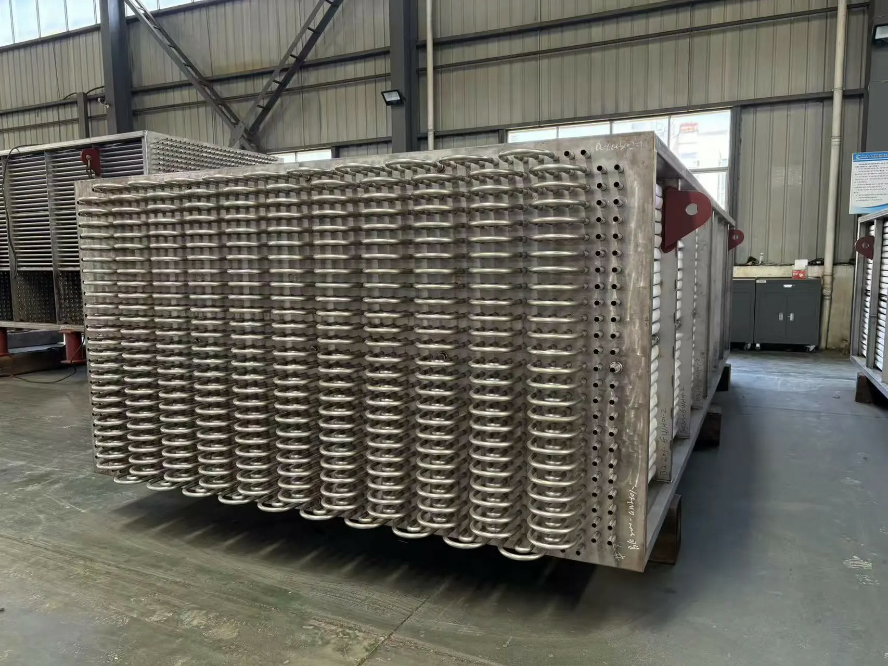
Fluoroplastic-Steel Heat Recovery Systems
Composite systems are particularly suitable for environmental applications.
Fluoroplastic Layer
* Resists chemical corrosion from acidic and alkaline media
* Prevents surface fouling and adhesion
* Improves long-term stability in moist environments
Steel Structural Core
● Provides mechanical strength
● Supports industrial pressure and flow conditions
● Ensures structural integrity over long operation cycles
### Combined Effect
> Enables reliable heat recovery in chemically complex environmental systems.
SYSTEM BENEFITS
Why Environmental Systems Use Heat Recovery
1. Improved Energy Efficiency
Recover thermal energy from treated exhaust streams.
2. Reduced Operating Costs
Lower energy consumption for auxiliary heating systems.
3. Enhanced Environmental Performance
Improves overall plant sustainability and energy utilization.
4. Stable Long-Term Operation
Corrosion-resistant design improves system reliability.
5. Reduced Maintenance Requirements
Anti-fouling surfaces minimize cleaning and downtime.
KEY INSIGHT
Environmental Systems Require Multi-Risk Engineering
Unlike single-source industrial systems, environmental applications involve:
● chemical corrosion
● moisture condensation
● particulate fouling
Effective heat recovery must address all three simultaneously.
CONCLUSION
Environmental systems applications play a key role in industrial sustainability and emissions control.
By integrating corrosion-resistant materials with engineered heat recovery design, it is possible to:
● improve system efficiency
● reduce energy waste
● enhance environmental compliance
● maintain long-term operational stability

@ 2025-2026 Langteng Machinery. All Rights Reserved.