
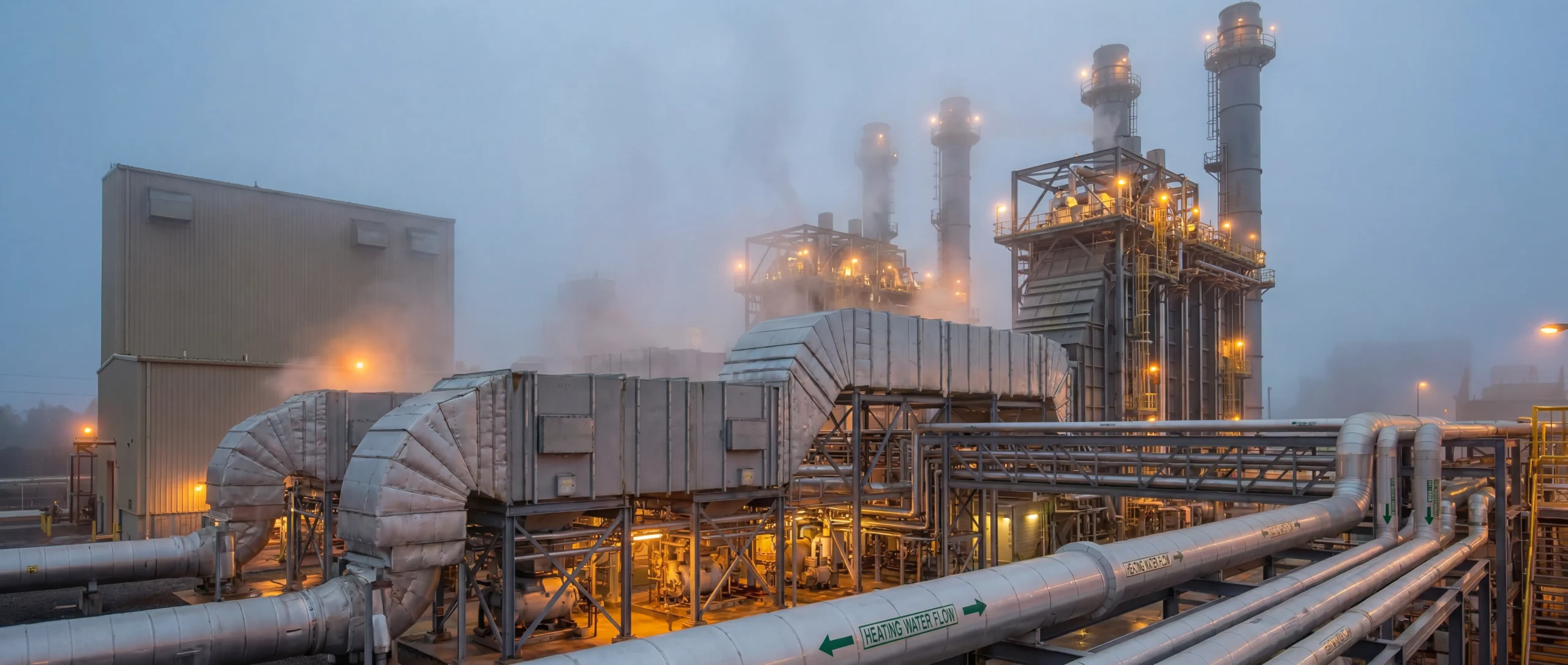
A municipal environmental treatment facility sought to improve energy efficiency by
recovering waste heat from its flue gas treatment system.
The project required stable operation downstream of the induced draft fan and upstream of the
desulfurization unit, where high-humidity flue gas with acidic condensate caused severe corrosion of
conventional heat exchangers.
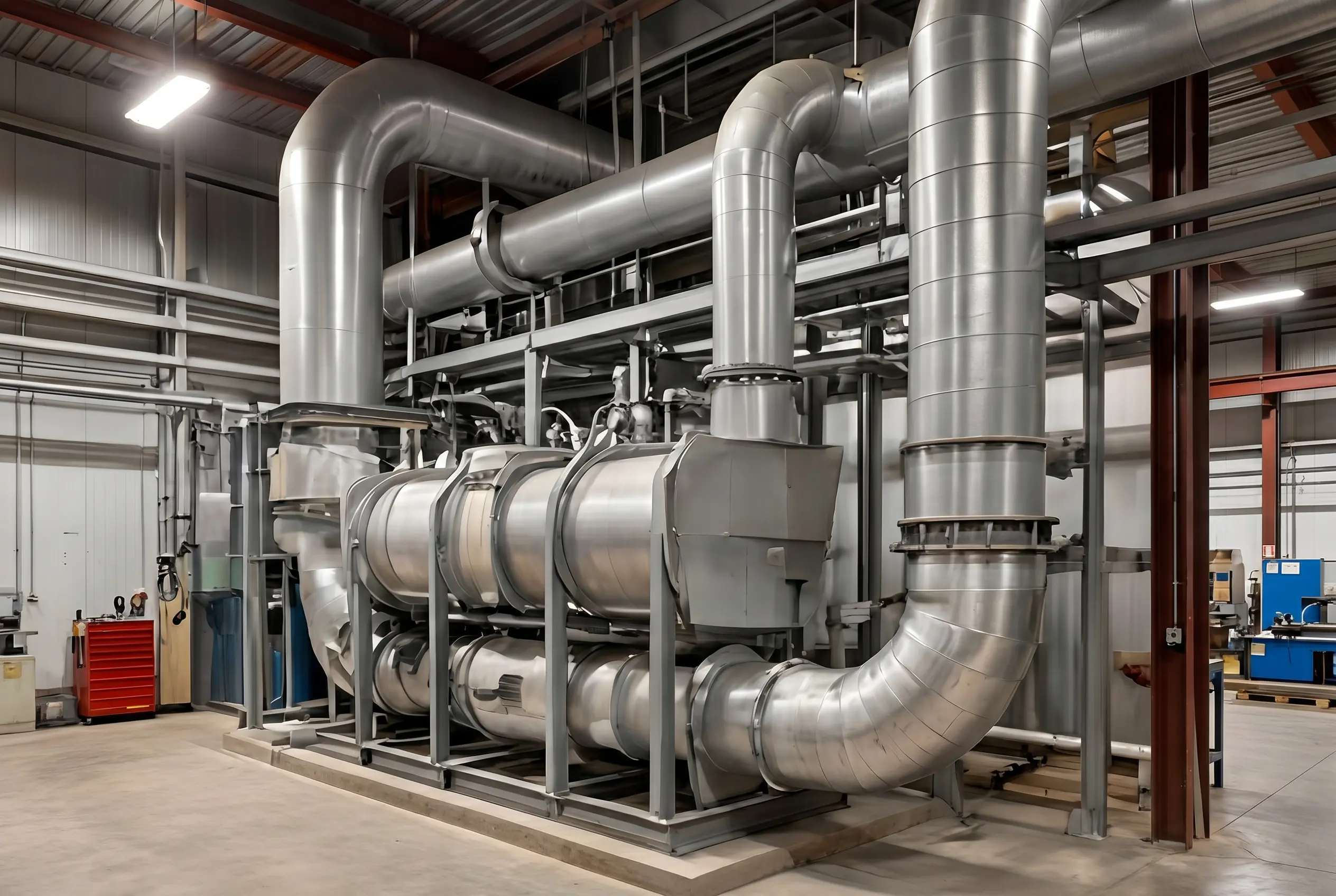
A fluoroplastic-steel low-temperature economizer system was implemented to maximize thermal recovery and
ensure long-term operational reliability.
| Item | Value |
| Boiler Capacity | 130 t/h |
| Flue Gas Flow Rate | 420,000 Nm³/h |
| Flue Gas Inlet Temperature | 145° C |
| Flue Gas Outlet Temperature | 80° C |
| Heating Water Flow Rate | 700 t/h |
| Heating Water Inlet Temperature | 45° C |
| Heating Water Outlet Temperature | 75° C |
| Flue Gas–Side Resistance | ≤ 750 Pa |
* Representative project data for an environmental flue gas waste heat recovery application. *

The treated flue gas contained sulfur compounds and highly corrosive acidic condensate below the dew point.

Continuous wet operating conditions accelerated corrosion and moisture-related equipment fatigue.
Large volumes of low-grade waste thermal energy were discharged without recovery.

The facility required stable long-term performance under frequent system interruption.
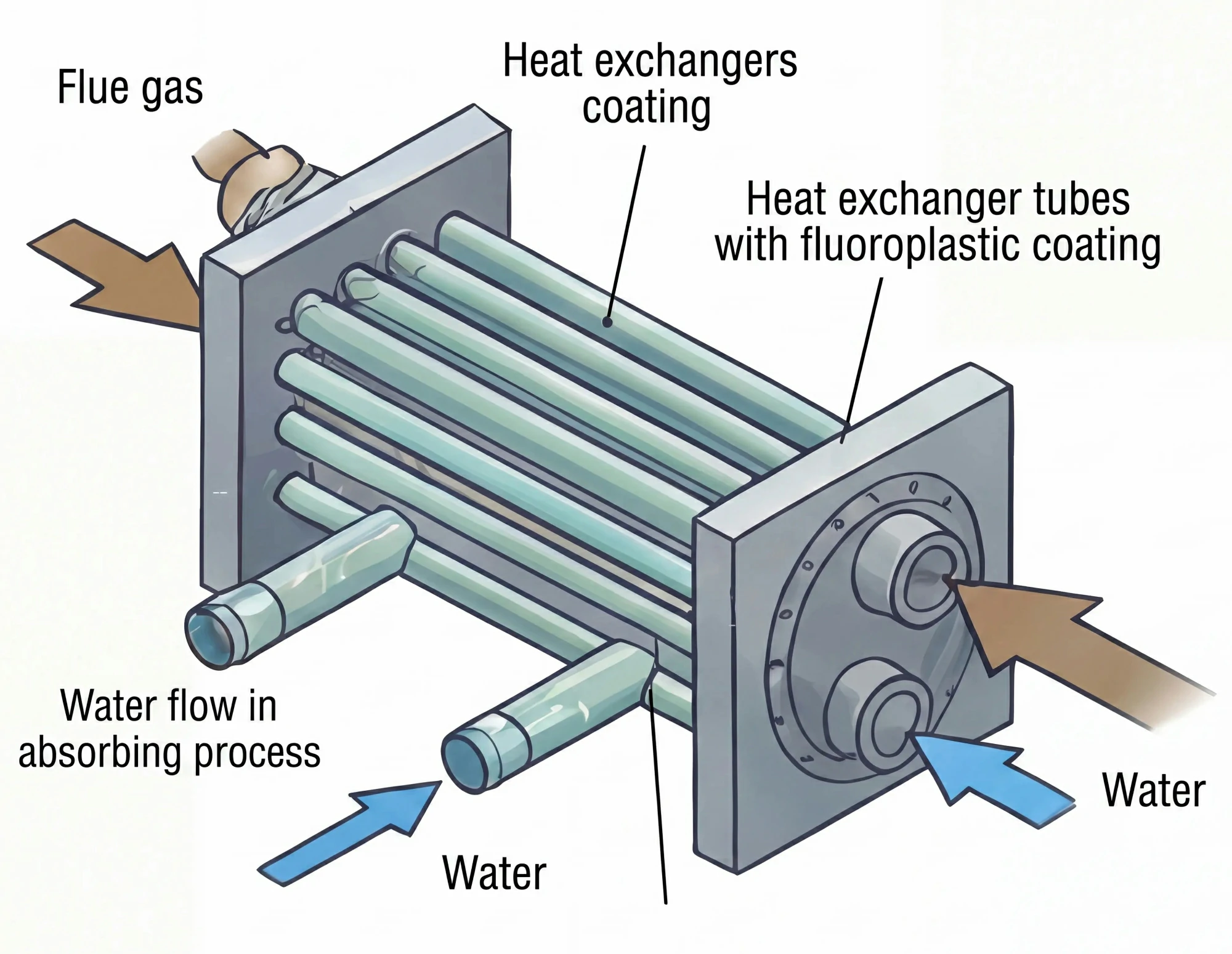
Installed between the induced draft fan and desulfurization tower, the system captures waste heat from the flue gas stream and transfers it to the facility’s heating water system.
This enables reliable operation below the acid dew point while maintaining stable thermal performance.
Flue gas exhaust temperature reduced from 145°C to 80°C.

Recovered thermal energy reduced facility heating loads.

Reliable performance under high-acid condensate and high-humidity environments.

Significant reduction in corrosion-caused replacement cycles.

Recover waste heat previously discharged to atmosphere.

Reduce utility heating expenses.

Maintain stable operation across the system lifespan.

Reduce maintenance costs over the system lifespan.