
Time: Oct 23 2026 Views: 16
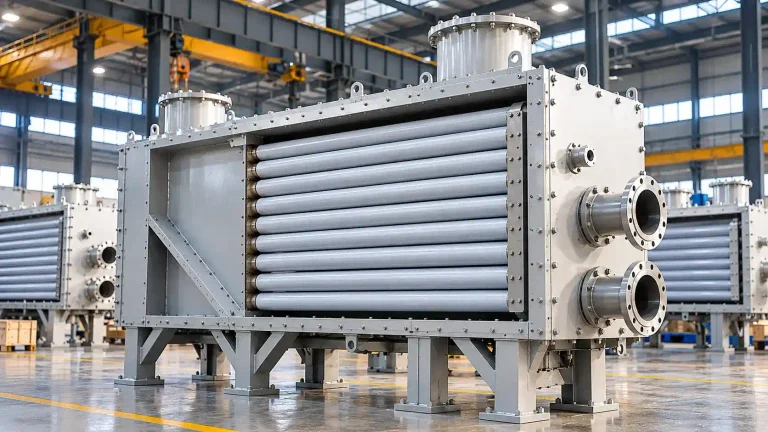
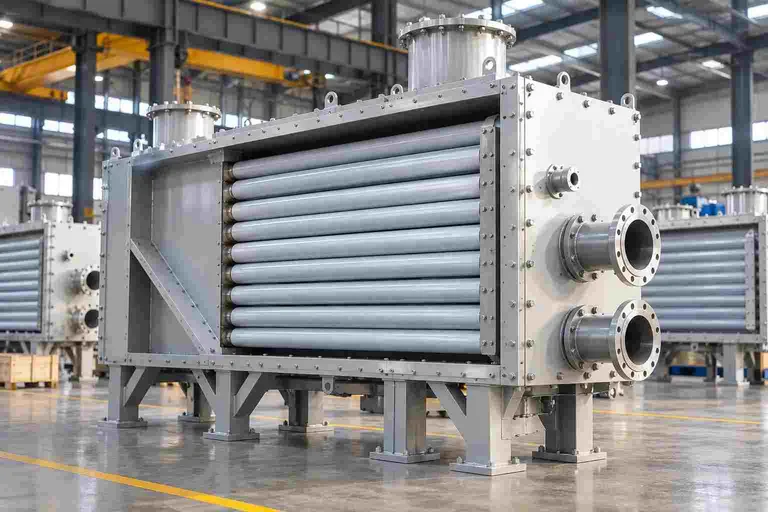
Corrosion-resistant heat exchangers help industrial systems move heat reliably when fluids, gases, salts, acids, or condensate would quickly damage ordinary equipment. The main benefit is not simply longer service life; it is steadier production, fewer leaks, safer operation, and a more predictable maintenance plan. For facilities handling seawater, sour gas, chemical streams, or industrial flue gas heat recovery, the right material and protection strategy can make the difference between planned upkeep and expensive emergency shutdowns.
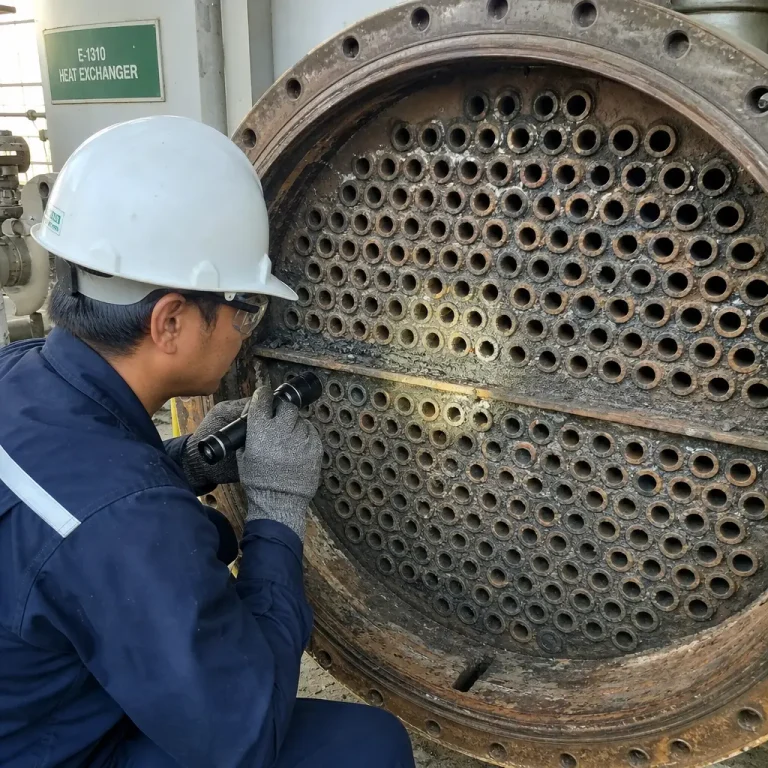
Corrosion resistance matters because a heat exchanger is only useful when its heat-transfer surfaces stay intact, clean enough to perform, and safe under pressure and temperature changes. Heat exchanger corrosion can thin tubes, pit metal, open leaks between process streams, reduce thermal efficiency, and force repeated repairs. In demanding plants, corrosion resistant heat exchangers are often chosen not as a premium upgrade, but as a practical way to protect uptime and reduce lifecycle risk.
A heat exchanger usually sits at a critical point in the process. If it fails, the impact may spread beyond one piece of equipment: production can slow, downstream equipment can be exposed to contamination, and maintenance teams may need to isolate, clean, inspect, and repair under time pressure. A corrosion-resistant heat exchanger is designed to reduce those risks by matching the equipment to the chemistry and operating conditions it will actually face.
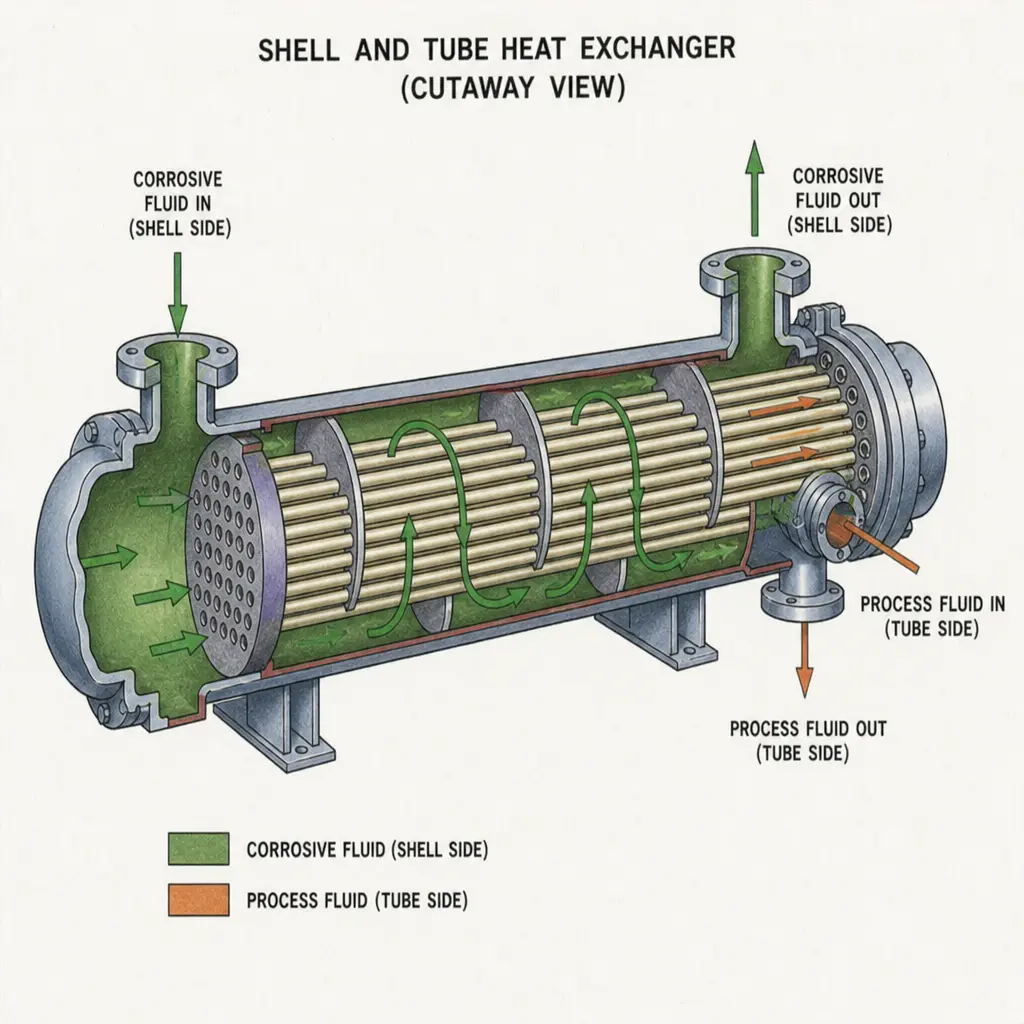
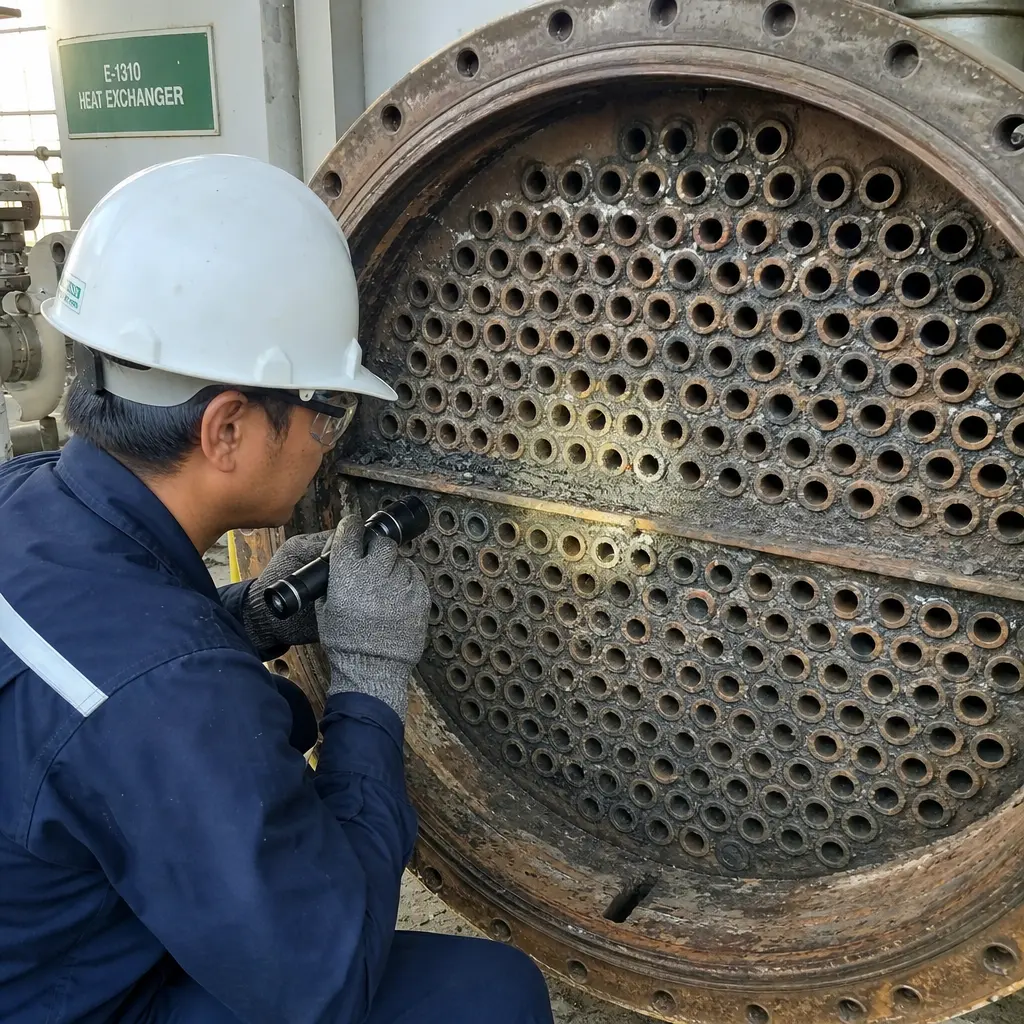
The visible cost of corrosion is the repair bill, but the larger cost often comes from lost production, repeated cleaning, replacement parts, safety controls, and shortened equipment life. Uniform corrosion may slowly reduce wall thickness, while localized forms such as pitting can create serious failure points before the overall unit looks badly damaged. That is why a low purchase price can become expensive if the material is poorly matched to the service.
Corrosion also affects performance. Deposits, roughened surfaces, under-deposit attack, and fouling can reduce heat transfer, forcing the system to use more energy or operate below target capacity. In heat recovery applications, especially where low-temperature condensation is involved, corrosive condensate can attack surfaces that were not selected for acidic service. Good material selection supports both reliability and energy efficiency.
Heat exchanger corrosion is not one single problem. Different mechanisms can appear depending on fluid chemistry, temperature, velocity, oxygen content, chloride concentration, pH, mechanical stress, and the mix of metals in the system. Understanding the likely attack mode helps engineers choose the right corrosion-resistant materials and maintenance approach.
Common mechanisms include:
These mechanisms are why heat exchanger maintenance should go beyond cleaning schedules. Inspection records, fluid analysis, wall-thickness checks, and failure reviews all help reveal whether the root cause is chemistry, velocity, material selection, design detail, or operating practice.
The best material depends on the specific fluid, temperature, pressure, contaminants, and required life of the equipment. There is no universal corrosion resistant heat exchanger material that is ideal for every service. A shell-and-tube unit in seawater cooling, a chemical plant exchanger handling mixed acids, and a flue gas heat recovery unit exposed to acidic condensate all need different selection logic.
316L stainless steel is widely used where general corrosion resistance is needed and the service is not too aggressive. It can be a practical choice for mild chemical streams, clean water, and moderate environments, but it may struggle in high-chloride or stagnant conditions. When chloride exposure rises, especially in seawater or brines, more resistant grades may be needed.
Duplex stainless steels such as 2205 and super duplex grades such as 2507 offer improved resistance to chloride-related corrosion compared with common austenitic stainless steels. They also bring higher strength, which can help in pressure equipment design. However, they still require careful attention to fabrication, temperature limits, and service chemistry.
Nickel-based alloys are often used when stainless steel is not enough. Alloy 625 is valued in seawater, sour brines, and chloride-rich environments because it combines corrosion resistance with strong mechanical performance. Alloy 825 and Alloy 28 may be considered for specific acidic or sour services, depending on chemistry and temperature.
Hastelloy alloys, including C-276, are commonly associated with severe chemical service, mixed acids, and highly aggressive environments. These materials cost more upfront, but they may be justified where failure would be far more expensive than the premium material. In harsh plants, the better question is often not “What is cheapest today?” but “What survives the full operating reality?”
Plastic heat exchangers made from materials such as polyethylene or PVDF can offer excellent corrosion resistance for certain fluids. They can be useful where metal attack is severe and temperatures, pressures, and mechanical loads remain within polymer limits. Their limitations matter, though: thermal conductivity, pressure capability, temperature range, and mechanical durability must be checked carefully.
Coated or lined heat exchangers can also be effective when the base metal needs a barrier against corrosive fluids. Coatings may help extend the life of existing assets, but they must be compatible with the process, cleaning methods, thermal cycling, and possible abrasion. A damaged coating can create localized attack points, so inspection and repair procedures are part of the solution.
Searches such as “corrosion resistant materials shell tube heat exchanger seawater 2024 2025” reflect a real concern: buyers want current, practical guidance for choosing materials in tough applications without overspending. The answer is rarely a simple ranking. Instead, material selection should compare capital cost, expected service life, downtime exposure, inspection needs, repair difficulty, and the consequences of leakage.
A practical decision framework includes:
This approach helps prevent two common mistakes: buying a material that is too weak for the service, or overbuying an expensive alloy when a coating, design change, or more targeted upgrade would solve the problem.
A corrosion-resistant design starts with material selection, but it should not end there. Equipment geometry, operating controls, and maintenance practices can either support the material or undermine it. Even a premium alloy can fail early if deposits accumulate, velocities are too high, incompatible metals are coupled, or cleaning chemicals attack protective films.
Useful protection strategies include:
Some facilities also use advanced surface technologies, corrosion-inhibiting additives, vapor corrosion inhibitor packaging for stored components, or specialized cleaning products. These tools can be valuable, especially for retrofits and preservation, but they should be selected around the actual corrosion mechanism rather than applied as a generic fix.
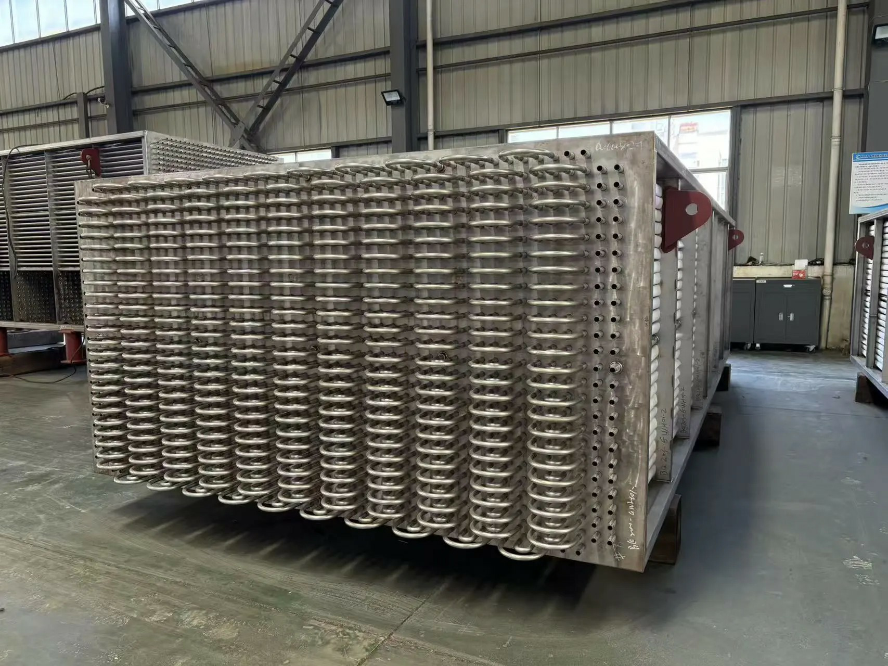
Industrial flue gas heat recovery can improve energy use by capturing heat that would otherwise be lost. The challenge is that flue gas may contain compounds that form acidic condensate when temperatures drop below certain thresholds. If the exchanger surface is not designed for that environment, corrosion can accelerate in cold-end sections or low-temperature zones.
For this reason, flue gas heat recovery projects need careful attention to materials, surface temperatures, drainage, cleaning access, and condensate chemistry. A corrosion-resistant heat exchanger in this context protects both the energy-saving objective and the reliability of the production process. If corrosion forces frequent bypassing or shutdowns, the expected efficiency benefit can disappear quickly.
Heat exchanger maintenance becomes more predictable when corrosion is considered during design and procurement. Instead of reacting to leaks, teams can monitor known risk areas, trend performance, and schedule inspections around likely degradation patterns. That makes maintenance less disruptive and helps decision-makers plan budgets with fewer surprises.
A useful maintenance plan may include visual inspection, nondestructive testing, tube sampling, pressure testing, cleaning validation, gasket checks, and fluid chemistry review. Operators should also record changes in process conditions, because a material that performed well under one chemistry may not tolerate a new cleaning solution, higher chloride load, or longer shutdown exposure. The goal is not just to clean the exchanger, but to understand how its condition is changing over time.
The main benefits of corrosion resistant heat exchangers show up in everyday operations. They support safer containment of fluids, steadier heat transfer, longer replacement intervals, and fewer emergency repairs. In critical services, they can also reduce the risk of cross-contamination between streams or unplanned exposure to hazardous materials.
The strongest business case usually appears when the equipment is evaluated over its full life. A premium alloy, coating, or upgraded design may cost more at purchase, but it can be the lower-cost option if it prevents repeated outages, protects production schedules, and reduces maintenance intensity. For plants where downtime is expensive, reliability has direct financial value.
A good specification balances chemistry, mechanics, maintainability, and cost. Before choosing a corrosion-resistant heat exchanger, clarify the service conditions and identify the corrosion mechanisms most likely to matter. Then compare materials and protection strategies by lifecycle performance, not just initial price.
In practical terms:
Corrosion cannot always be eliminated, but it can be managed intelligently. With the right corrosion-resistant materials, thoughtful design, and disciplined maintenance, heat exchangers can deliver longer service life, safer operation, and more reliable heat transfer in some of the harshest industrial environments.

@ 2025-2026 Langteng Machinery. All Rights Reserved.