Time: Oct 27 2026 Views: 16
Corrosion resistance, deeper heat recovery, and real-world industrial applications
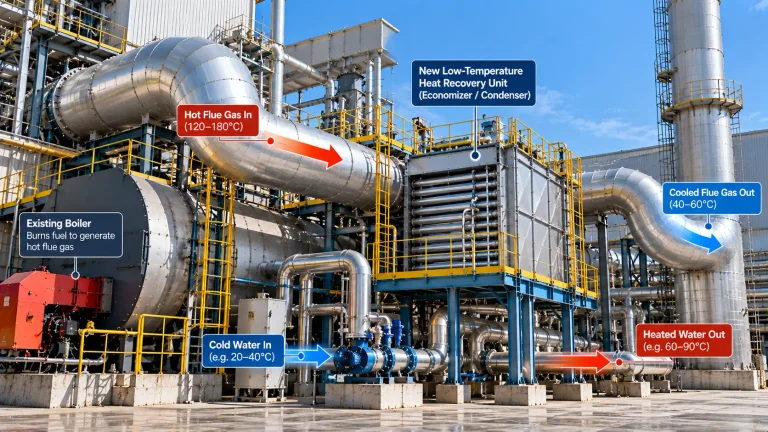
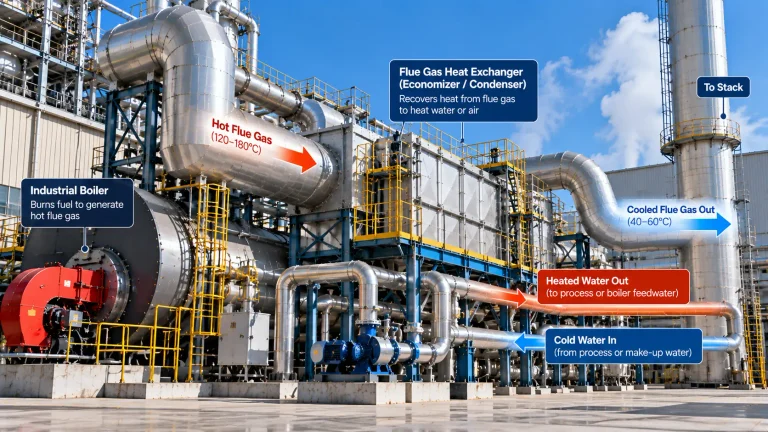
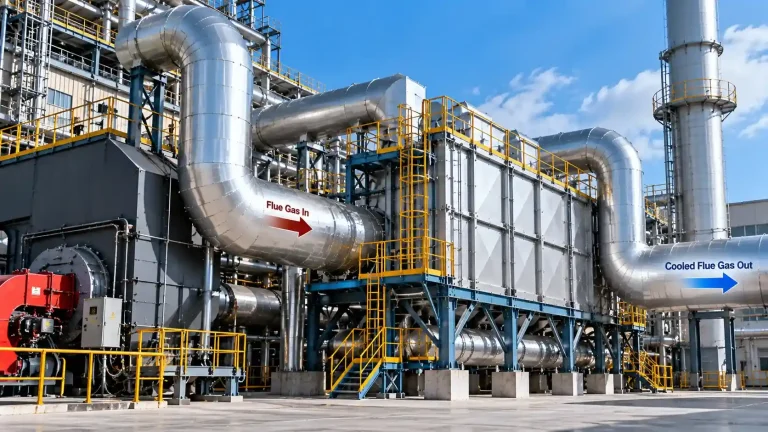
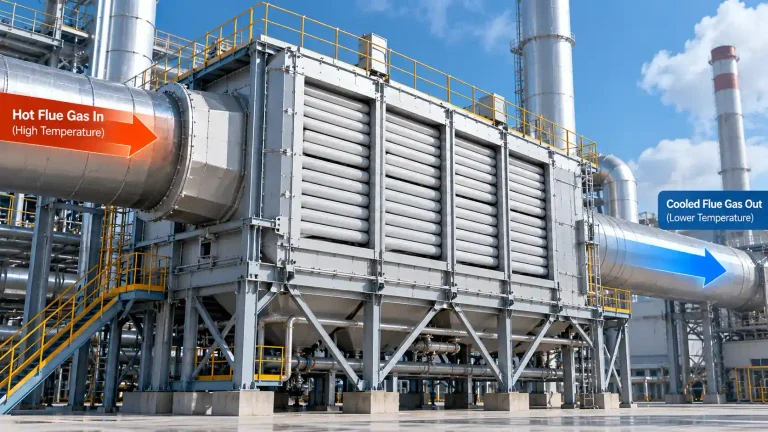
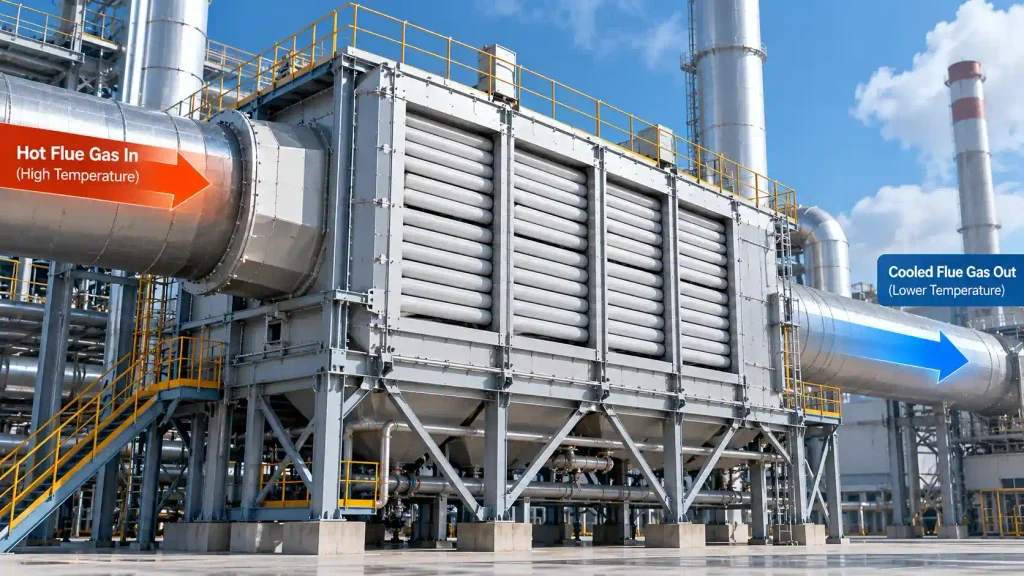
Industrial flue gas heat exchangers play an important role in improving energy efficiency across power generation, chemical processing, metallurgy, and other energy-intensive industries.
By recovering thermal energy from exhaust gases, these systems can reduce fuel consumption, improve process efficiency, and make better use of existing energy resources.
However, conventional heat exchangers face a fundamental limitation: the more heat they recover, the greater the potential risk of low-temperature corrosion.
This challenge becomes particularly serious when industrial exhaust gases contain sulfur compounds, moisture, or other corrosive constituents.
Fluoropolymer-steel composite technology offers a different approach to this problem.
By combining a corrosion-resistant fluoropolymer surface with a mechanically supportive steel substrate, the technology can expand the operating possibilities of flue gas heat recovery equipment.
But how does it work, what are its limitations, and where does it provide real industrial value?
Traditional industrial flue gas heat exchangers are commonly manufactured using carbon steel, stainless steel, or specialized metallic alloys.
These materials provide mechanical strength and useful thermal conductivity.
For high-temperature, non-condensing applications, conventional metallic heat exchangers can offer reliable and economical performance.
The challenge arises when flue gas temperatures decrease.
Industrial flue gases may contain sulfur oxides, water vapor, and other chemically aggressive components.
Under appropriate conditions, sulfur trioxide and water vapor contribute to sulfuric acid formation.
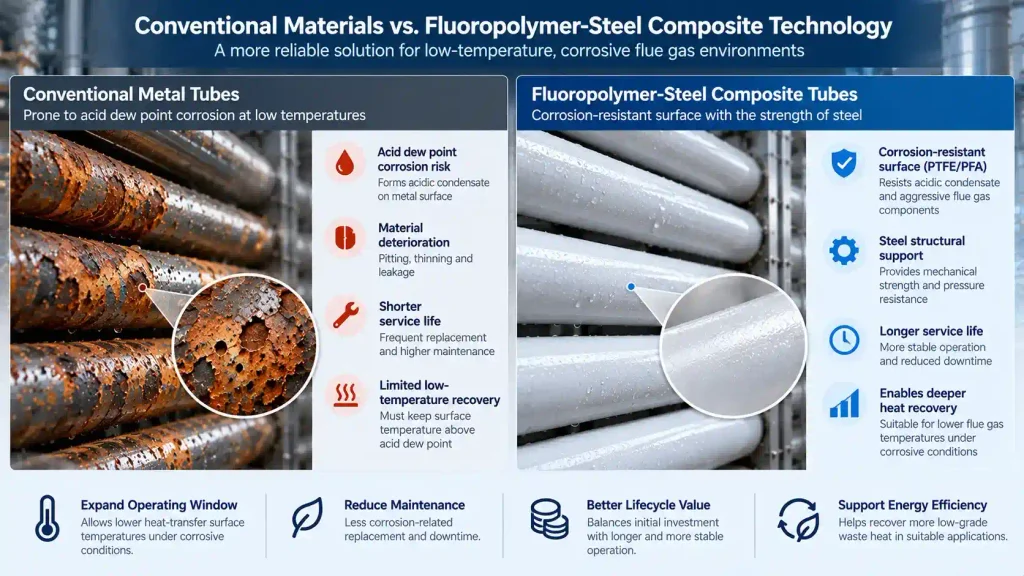
When heat-transfer surfaces fall below the acid dew point, acidic condensate may form on exposed metal surfaces.
This can lead to:
Importantly, the acid dew point is not the same as the water vapor dew point.
Acid condensation may begin before substantial water vapor condensation occurs.
One conventional approach is to maintain heat-transfer surface temperatures above the critical acid dew point.
Although this can reduce corrosion exposure, it may also limit the amount of recoverable energy.
A considerable portion of the flue gas's remaining thermal energy can therefore leave the system unused.
For plants seeking deeper waste heat recovery, this creates a conflict between energy efficiency and equipment reliability.
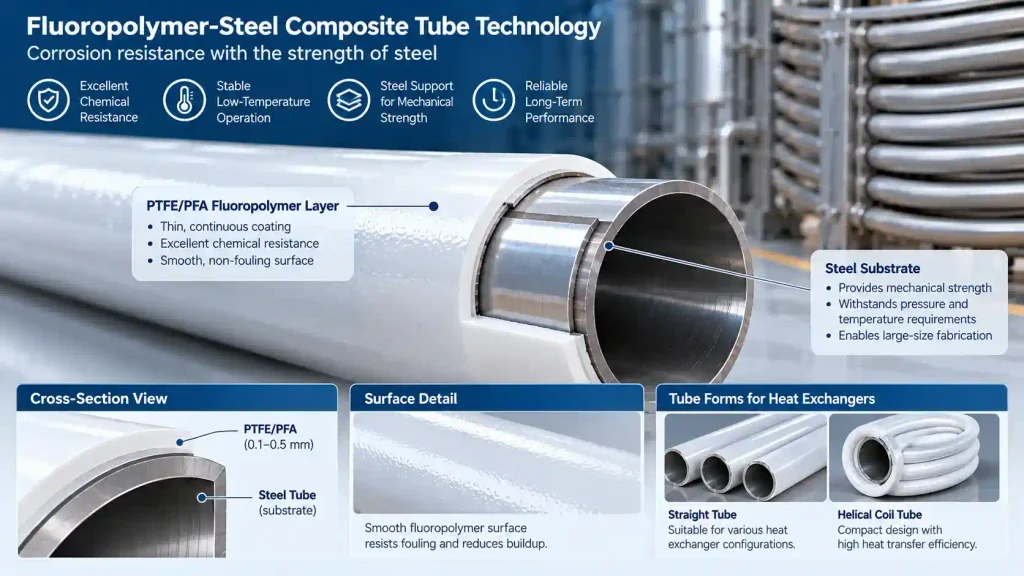
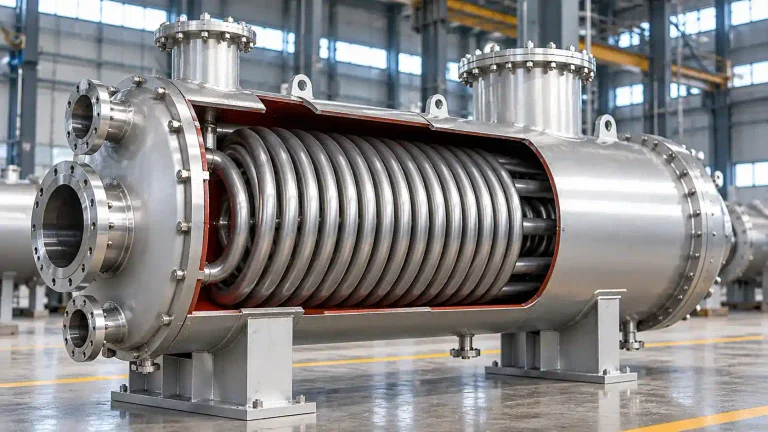
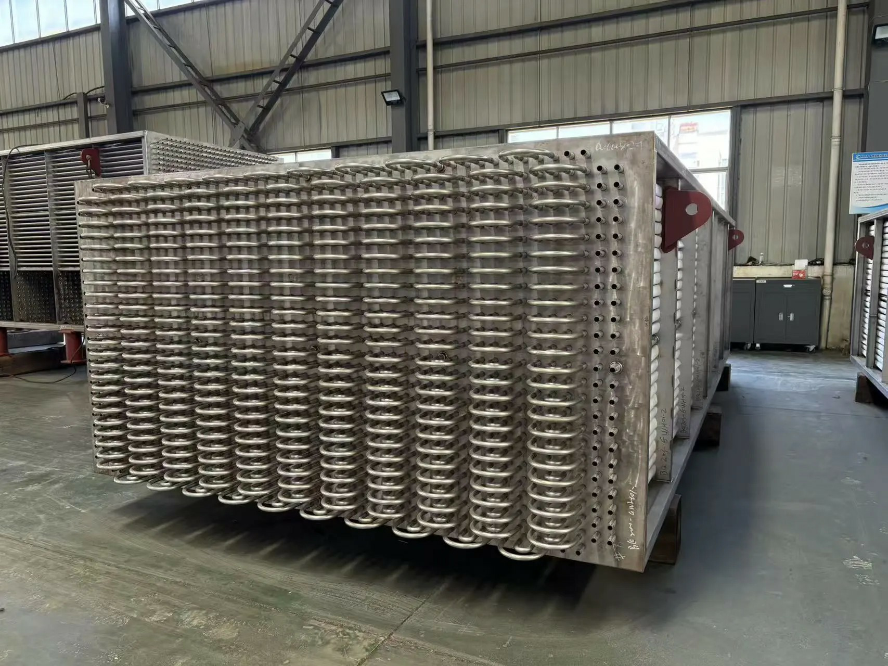
Fluoropolymer-steel composite technology combines two materials with different engineering functions.
The steel substrate provides structural strength, while an outer fluoropolymer layer protects the metal from direct exposure to compatible corrosive media.
In Langteng's heat recovery equipment, this material concept is used to address the demands of corrosive industrial flue gas environments.
Fluoropolymers such as PTFE and PFA offer strong chemical resistance to many acids and industrial chemicals.
When properly selected and applied, these materials can provide a protective barrier between corrosive flue gas constituents and the underlying steel.
However, chemical compatibility must be evaluated for the specific temperature, chemical composition, concentration, and operating conditions.
Steel provides mechanical strength and dimensional stability that would be difficult to achieve with unsupported fluoropolymer tubing in some industrial applications.
This is especially important when heat exchangers must accommodate pressure, structural loads, thermal cycling, and large equipment dimensions.
The technology does not attempt to replace every advantage of steel with polymer.
Instead, it assigns different functions to different materials.
The fluoropolymer surface addresses corrosion exposure, while the steel substrate carries the mechanical load.
This combination can be particularly valuable when conventional metal surfaces are the limiting factor in low-temperature heat recovery.
One of the most important engineering questions is whether adding a fluoropolymer layer reduces thermal performance.
The answer requires a distinction between material conductivity and overall heat exchanger performance.
PTFE and PFA generally have much lower thermal conductivity than steel.
Consequently, adding a fluoropolymer layer introduces additional thermal resistance.
For otherwise identical equipment operating under identical conditions, this resistance may reduce the overall heat-transfer coefficient.
Therefore, it would be inaccurate to claim that fluoropolymer-steel composite tubes inherently transfer heat faster than unprotected metallic tubes.
The principal advantage is that corrosion protection may allow the heat exchanger to operate in a temperature range that would otherwise be unsuitable for conventional metal surfaces.
In practical terms, the system may recover additional heat by permitting lower flue gas outlet temperatures.
This potential increase in recoverable energy can outweigh the additional thermal resistance of the protective layer.
The outcome depends on:
The correct objective is not maximum material conductivity alone.
It is reliable and economical heat recovery under the actual process conditions.
Conventional flue gas heat recovery often focuses on sensible heat: the energy removed as the gas temperature decreases.
However, flue gases containing water vapor may also offer opportunities for latent heat recovery.
A non-condensing heat exchanger transfers heat from hot flue gas to water, air, or another working fluid.
Typical applications include economizers and air preheaters.
When suitable conditions allow water vapor to condense, additional thermal energy can be released.
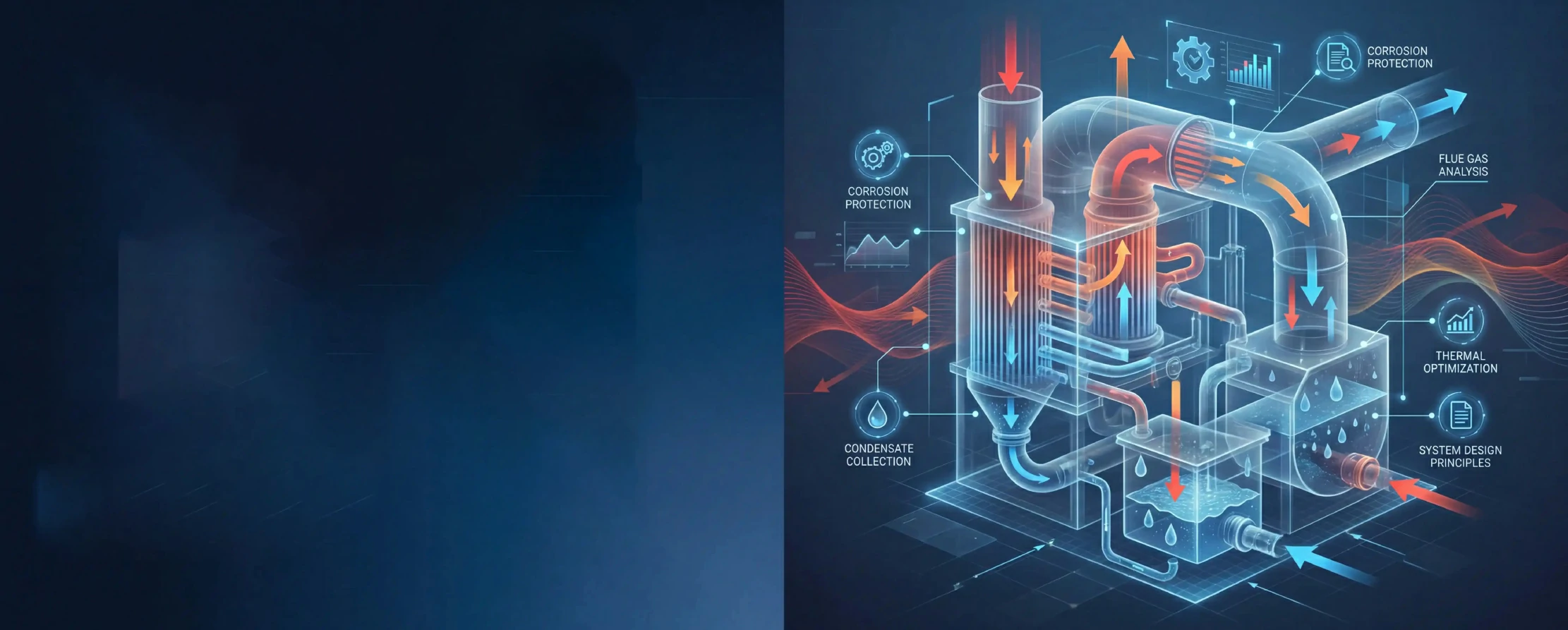
This is the principle behind condensing flue gas heat exchangers.
However, condensation may introduce acidic liquid containing sulfur compounds or other contaminants.
The equipment must therefore be designed for the resulting chemical environment.
Fluoropolymer-steel construction can provide an alternative material approach for equipment exposed to acidic condensate.
This may make deeper cooling and selected condensing heat recovery applications more practical.
Nevertheless, corrosion-resistant tubes alone do not guarantee successful condensing operation.
The complete system must address condensate collection, drainage, downstream corrosion, fouling, material compatibility, and wastewater treatment requirements.
Different materials remain appropriate for different industrial operating conditions.
| Technology | Principal Advantage | Main Limitation | Suitable Conditions |
| Carbon Steel | Cost-effective, strong, established | Acid dew point corrosion | Non-condensing, relatively non-corrosive flue gas |
| Stainless Steel | Mechanical strength and selected corrosion resistance | Alloy-dependent corrosion risk | Moderate or controlled corrosive exposure |
| High-Alloy Metals | Resistance to selected aggressive environments | High material and fabrication costs | Specialized chemical services |
| Full Fluoropolymer | Excellent chemical resistance in compatible environments | Low conductivity and structural limitations | Suitable low-temperature, lower-pressure applications |
| Fluoropolymer-Steel Composite | Corrosion-resistant surface with steel support | Added thermal resistance and protective-layer integrity requirements | Selected corrosive, low-temperature heat recovery applications |
The comparison shows why no single technology should be considered universally superior.
For high-temperature, non-corrosive flue gas, conventional carbon steel may provide the best economic solution.
For severe corrosion environments, high-alloy metals or fluoropolymer-based technologies may be more appropriate.
Fluoropolymer-steel composite technology is particularly relevant when corrosion resistance and mechanical support must be combined.
The practical value of fluoropolymer-based heat recovery is best understood through industrial applications.
Coal-fired and other sulfur-containing fuel systems may produce flue gases with significant acid dew point corrosion potential.
Conventional heat recovery equipment may require minimum surface temperatures to limit corrosion.
Corrosion-resistant composite heat exchangers can be evaluated for downstream low-temperature recovery duties.
Recovered energy may be transferred to boiler feedwater, condensate, or other plant water circuits.
The potential benefit is improved utilization of exhaust heat without relying exclusively on high metal surface temperatures.
Steel production and metallurgical facilities generate substantial quantities of exhaust heat.
Depending on the process, flue gases may contain sulfur compounds, moisture, particulates, and other contaminants.
Corrosion-resistant heat exchangers may be suitable for recovering low-grade thermal energy to preheat circulating water or supply industrial heating systems.
The design must account for gas composition, particulate loading, cleaning access, and pressure loss.
Chemical facilities can produce exhaust streams containing acidic or chemically aggressive components.
For these applications, corrosion resistance may be as important as thermal performance.
Fluoropolymer-steel composite equipment can be considered where the chemical environment is compatible with the protective material and the temperature remains within the qualified operating range.
Waste treatment processes may generate moist, chemically aggressive exhaust gases.
Low-temperature heat recovery can be challenging because of corrosion and fouling.
Corrosion-resistant surfaces may help make heat recovery more feasible, although gas pretreatment, cleaning systems, and condensate management remain important.
Industrial experience shows that corrosion-resistant polymer technologies can unlock heat recovery opportunities that conventional metallic equipment may struggle to achieve.
At the Chemelot industrial park in the Netherlands, utility provider USG implemented a corrosion-resistant economizer supplied by Heat Matrix.
The system recovers heat from corrosive incinerator flue gas and transfers it to boiler feedwater.
Reported project performance includes:
This example demonstrates how corrosion-resistant heat exchanger construction can support industrial water preheating.
In another project, Heat Matrix supplied a sulfuric acid-resistant polymer air preheater for a refinery.
Reported performance includes:
The project illustrates how corrosion-resistant air preheating can recover energy from exhaust streams where acidic condensation creates challenges.
These examples demonstrate the practical value of corrosion-resistant polymer heat recovery technologies.
They are not Langteng installations, and their reported performance should not be interpreted as guaranteed results for fluoropolymer-steel composite equipment.
Introducing a composite material changes more than the corrosion resistance of the heat-transfer surface.
It also affects manufacturing, mechanical design, and quality control.
The corrosion barrier must remain continuous and compatible with the operating environment.
Defects, damage, or loss of adhesion can expose the underlying steel to corrosive media.
Steel and fluoropolymer materials have different thermal expansion characteristics.
Repeated heating and cooling cycles may create stresses that must be considered during material selection and manufacturing.
The protective layer must be incorporated into the thermal design.
Tube diameter, wall thickness, arrangement, and heat-transfer area must be selected to achieve the required duty.
Composite heat exchangers require appropriate inspection methods to assess protective-layer condition and equipment integrity.
Cleaning procedures must also be compatible with the exposed surface material.
For manufacturers, these considerations make material processing and engineering quality control essential to long-term reliability.
Langteng is a China-based manufacturer specializing in fluoropolymer-steel composite heat recovery equipment for corrosive industrial environments.
Our product portfolio includes four principal equipment categories.
Flue Gas Economizers
Designed to recover exhaust heat for water preheating and industrial energy recovery.
Flue Gas Condensers
Engineered for applications involving deeper cooling and, where suitable, condensation heat recovery.
Air Preheaters
Designed to transfer recovered flue gas heat to combustion or process air.
Steam Heaters
Configured for industrial heating duties requiring application-specific thermal and material design.
Across these equipment categories, the objective is to combine thermal performance with corrosion-resistant construction.
Langteng's engineering approach considers the complete process, including operating temperatures, gas composition, heat recovery duty, pressure drop, material compatibility, and installation requirements.
The technology is particularly relevant when a project involves:
However, the decision should always be based on engineering and economic evaluation.
A higher initial equipment cost may be justified if improved corrosion resistance reduces replacement frequency or allows additional recoverable energy.
Conversely, for non-corrosive applications, conventional metal equipment may remain more economical.
A complete assessment should consider thermal performance, fan or pump energy consumption, maintenance requirements, installation costs, and expected operating life.
Fluoropolymer-steel composite technology does not eliminate the fundamental trade-offs of heat exchanger design.
Its main contribution is the possibility of combining corrosion-resistant surfaces with the structural advantages of steel.
For industrial flue gas heat exchangers, this can be particularly important when acid dew point corrosion limits conventional heat recovery.
By protecting heat-transfer surfaces, composite technology may allow deeper cooling, more useful heat recovery, and improved operating reliability under suitable conditions.
The greatest value is therefore not simply a different tube material.
It is the opportunity to design heat recovery systems for operating environments that are difficult to address with conventional metallic equipment.
Planning a Corrosion-Resistant Flue Gas Heat Recovery Project?
Contact Langteng to discuss your flue gas composition, operating temperatures, heat recovery requirements, and equipment configuration.
Our engineering team can help evaluate whether fluoropolymer-steel composite technology is suitable for your application.

@ 2025-2026 Langteng Machinery. All Rights Reserved.