
Time: Jul 6 2026 Views: 68
PROJECT OVERVIEW
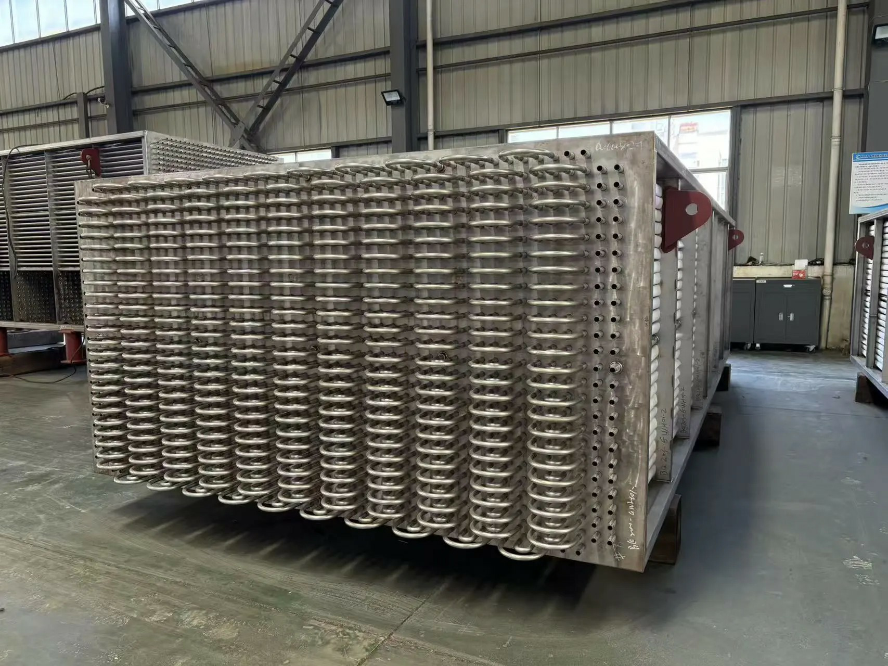
This case study presents a heat recovery system implemented in a waste acid recovery facility within a chemical production environment.
The system was designed to recover thermal energy from acidic waste streams while ensuring long-term resistance to severe corrosion and condensation conditions.
PROJECT CHALLENGE
Extreme Acidic Operating Environment
The waste acid recovery system operated under highly aggressive conditions:
● Flue gas temperature: 80°C – 220°C
● High concentration of sulfuric acid (H₂SO₄) and hydrochloric acid (HCl)
● Acid mist and vapor condensation zones
● Severe acid dew-point corrosion risk
● High moisture and chemical variability
● Continuous industrial operation
These conditions made conventional metallic heat exchangers unsuitable for long-term use.
ENGINEERING OBJECTIVE
The system was required to achieve:
● stable heat recovery from acidic waste streams
● resistance to strong acid corrosion and condensation
● long-term operational stability under chemical exposure
● reduced fouling and maintenance requirements
● improved energy utilization efficiency
SYSTEM SOLUTION
Fluoroplastic-Steel Composite Heat Recovery System
A fluoroplastic-steel composite heat recovery system was selected to meet the extreme operating conditions.
Structural Design
● Outer Layer: Fluoroplastic corrosion-resistant barrier
● Inner Core: Steel structural support tube
This dual-layer structure provides both chemical protection and mechanical integrity.
KEY ENGINEERING FEATURES
1. Acid Corrosion Resistance
The fluoroplastic outer layer isolates all metallic surfaces from direct contact with acidic media.
2. Acid Dew-Point Protection
The system is engineered to operate safely in condensation zones where sulfuric and hydrochloric acids form.
3. Structural Stability
The steel core ensures mechanical strength under pressure, thermal cycling, and long-term operation.
4. Anti-Fouling Surface
Low surface energy reduces acid mist adhesion and scaling formation, improving long-term performance.
5. Stable Heat Recovery
System maintains consistent thermal efficiency under variable acid concentration and flow conditions.
PERFORMANCE OUTCOME
After implementation, the system achieved:
● stable operation under highly corrosive acid conditions
● significantly reduced corrosion-related failures
● improved resistance to acid condensation damage
● lower maintenance frequency
● extended service life compared to conventional systems
KEY ENGINEERING INSIGHT
Waste Acid Systems Fail from Combined Effects
In waste acid recovery environments, system failure is typically caused by the combination of:
● acid dew-point condensation
● chemical corrosion (multi-acid environment)
● surface fouling from acid mist
Solving only one factor is insufficient for long-term reliability.
SYSTEM VALUE
The implemented solution delivered:
● improved energy recovery from waste acid streams
● reduced chemical treatment and disposal burden
● lower operating costs
● enhanced system stability
● improved environmental performance
CONCLUSION
Waste acid recovery systems represent one of the most extreme corrosion environments in industrial engineering.
By combining fluoroplastic corrosion protection with steel structural support, it is possible to achieve:
● safe operation in acidic condensation zones
● stable long-term heat recovery
● reduced maintenance requirements
● improved lifecycle performance

@ 2025-2026 Langteng Machinery. All Rights Reserved.