
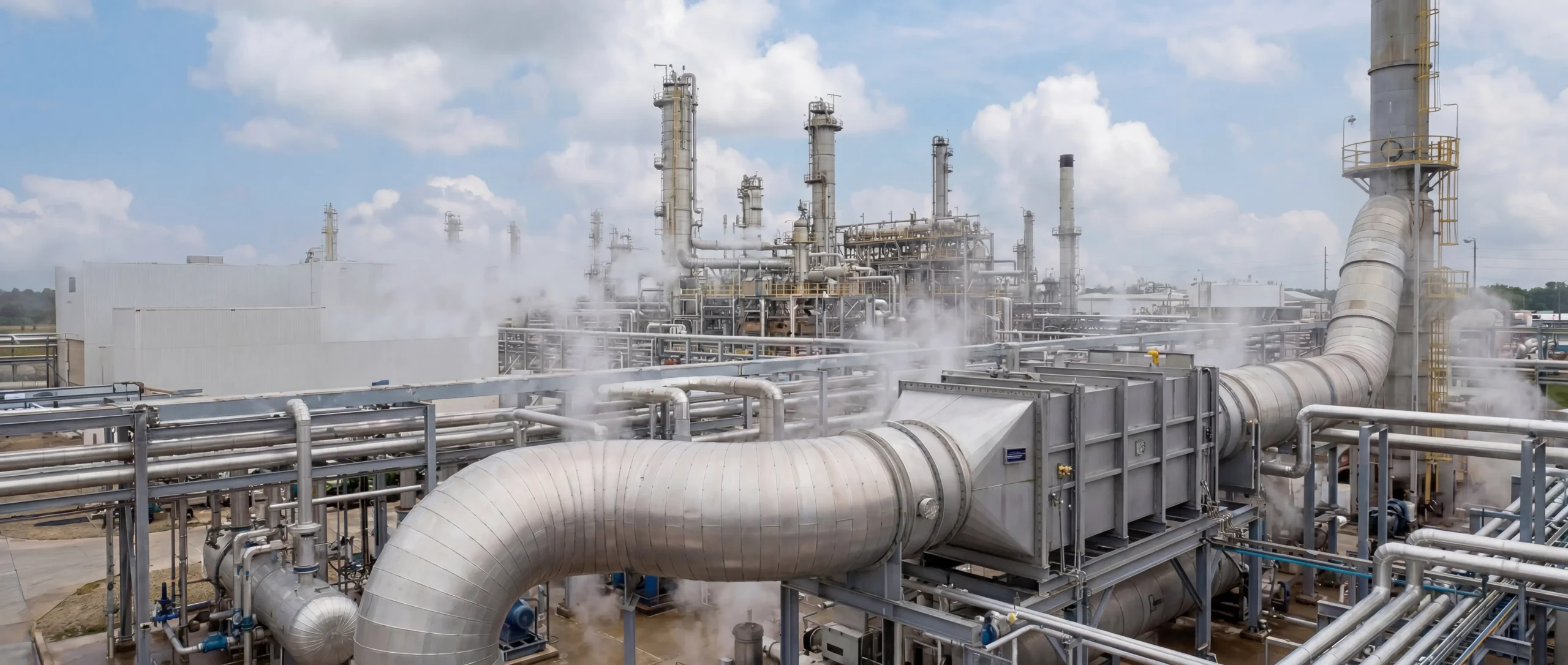
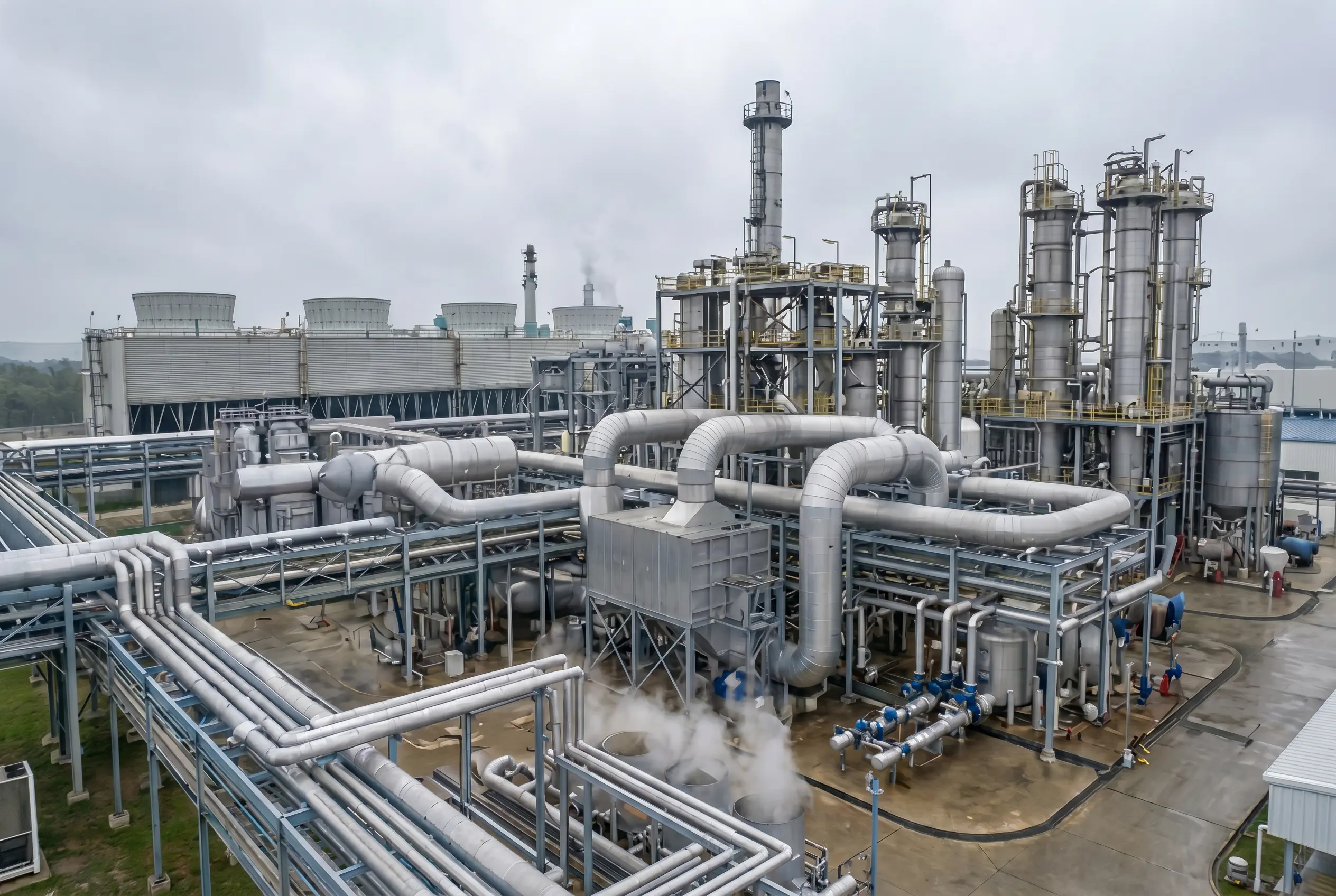
A large chemical manufacturing facility sought to improve energy efficiency by
recovering waste heat from corrosive process exhaust gas. Previous metal heat recovery equipment experienced
severe corrosion, leakage, and frequent shutdowns due to acidic condensate and high-humidity operating
conditions.
To achieve deeper heat recovery and stable long-term operation, a fluoroplastic-steel low-temperature
economizer system was implemented.
| Item | Value |
| Boiler Capacity | 180 t/h |
| Flue Gas Flow Rate | 520,000 Nm³/h |
| Flue Gas Inlet Temperature | 160°C |
| Flue Gas Outlet Temperature | 85°C |
| Heating Water Flow Rate | 850 t/h |
| Heating Water Inlet Temperature | 50°C |
| Heating Water Outlet Temperature | 82°C |
| Flue Gas-Side Resistance | ≤ 800 Pa |
* Representative project data for an environmental flue gas waste heat recovery application. *
The exhaust stream contained acidic vapor and corrosive compounds that rapidly degraded conventional metal heat exchangers.

Low-temperature recovery conditions created acidic condensate, causing severe material degradation.

Repeated corrosion-related failures increased maintenance costs and operational downtime.

Large quantities of recoverable thermal energy were discharged through the exhaust system.
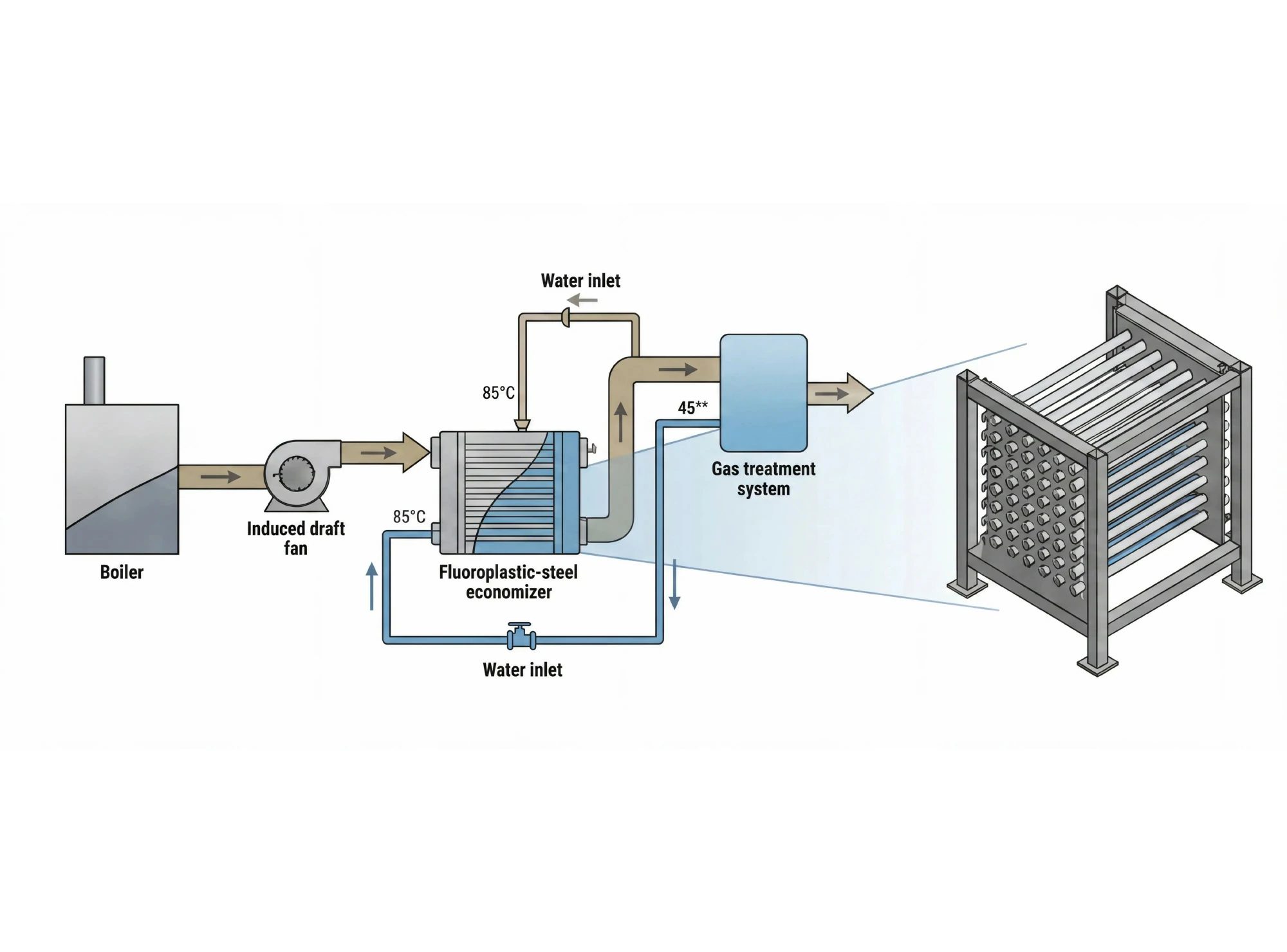
Installed within the process exhaust gas recovery system, the economizer captures low-grade thermal energy and transfers it to plant utility water systems.
This enables reliable operation below the acid dew point while maintaining stable heat transfer performance.
Flue gas temperature reduced from 160°C to 85°C.

Recovered heat reused for plant utility and process heating systems.

Reliable performance under acidic condensation and corrosive gas environments.

Significant reduction in corrosion-related shutdowns and replacement cycles.

Recover more usable energy from process exhaust streams.

Lower utility consumption through waste heat utilization.

Maintain stable operation under aggressive chemical environments.
Reduce maintenance and replacement costs over the system lifespan.