
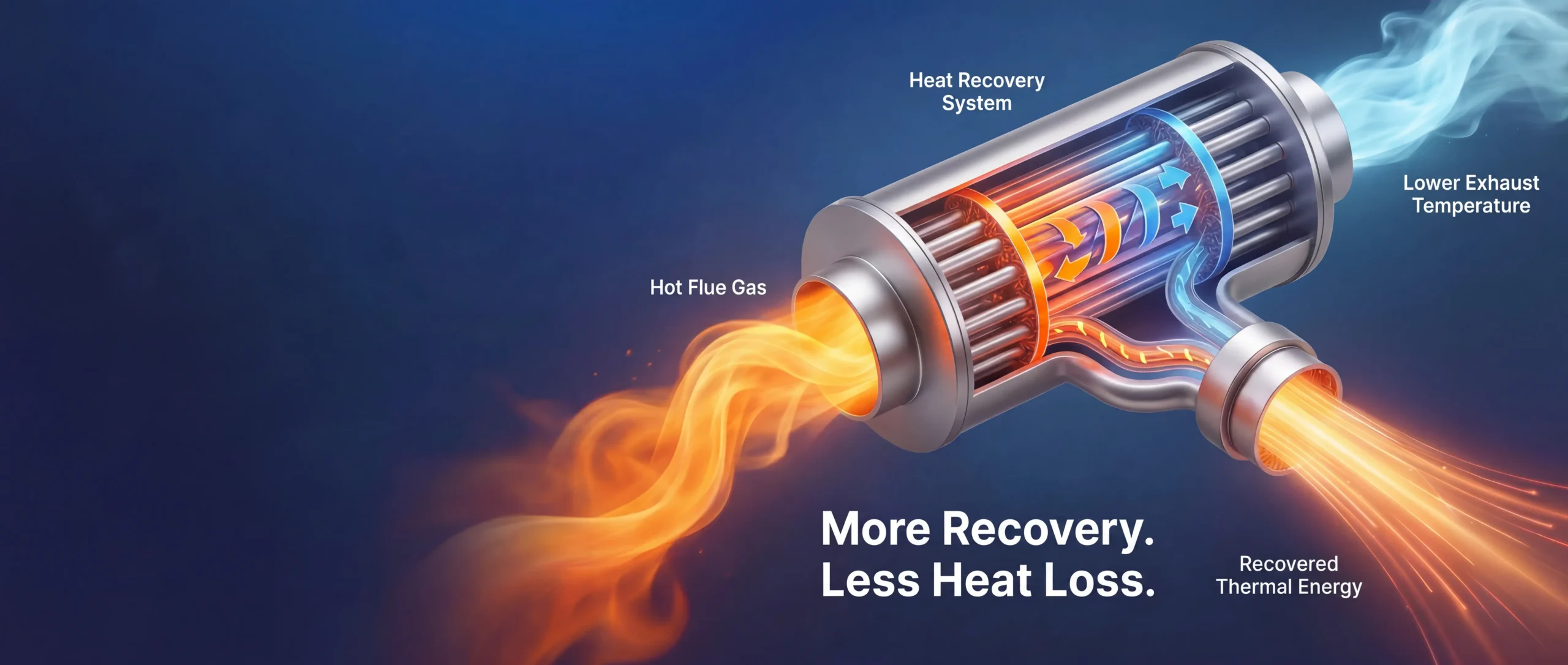
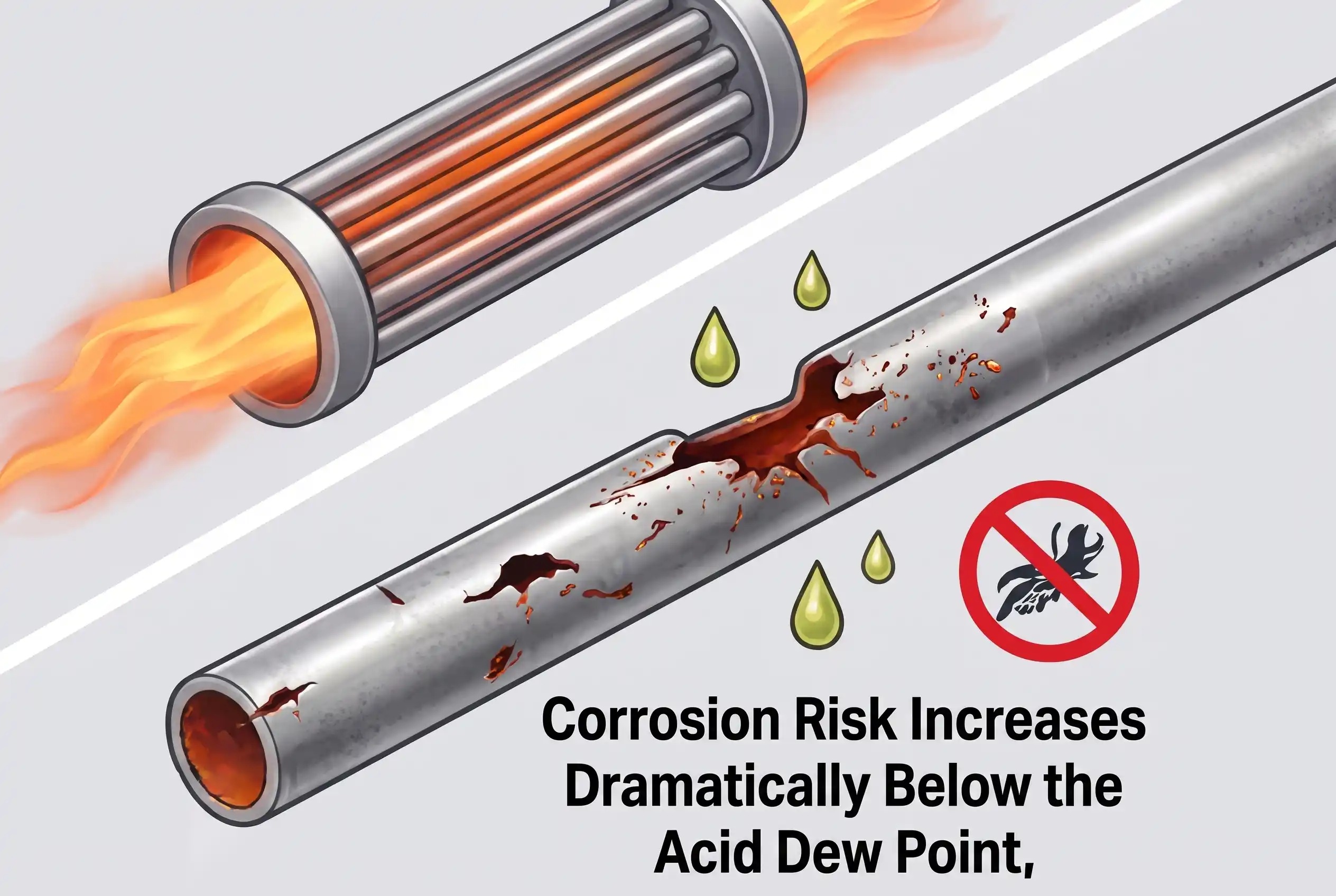
Many facilities discharge flue gas at temperatures well above the theoretical recovery limit. The reason is simple: As temperatures decrease, acidic condensate begins to form and attack heat transfer surfaces. This creates:
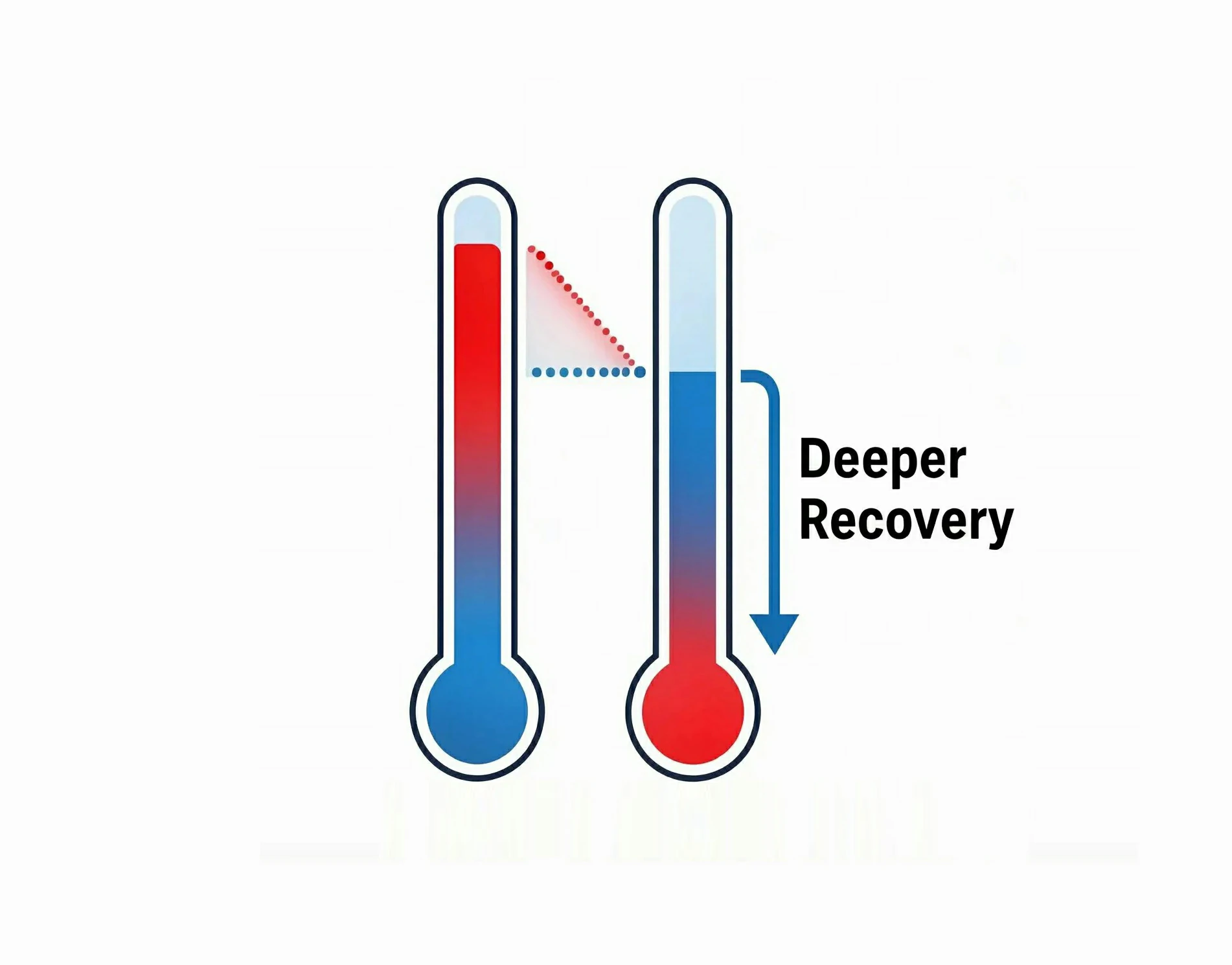
Deep heat recovery refers to reducing flue gas temperatures further than conventional systems while maintaining reliable long-term operation.

Higher exhaust temperatures.
Lower corrosion risk.
Lower energy recovery.

Lower exhaust temperatures.
Greater energy utilization.
Higher economic return.
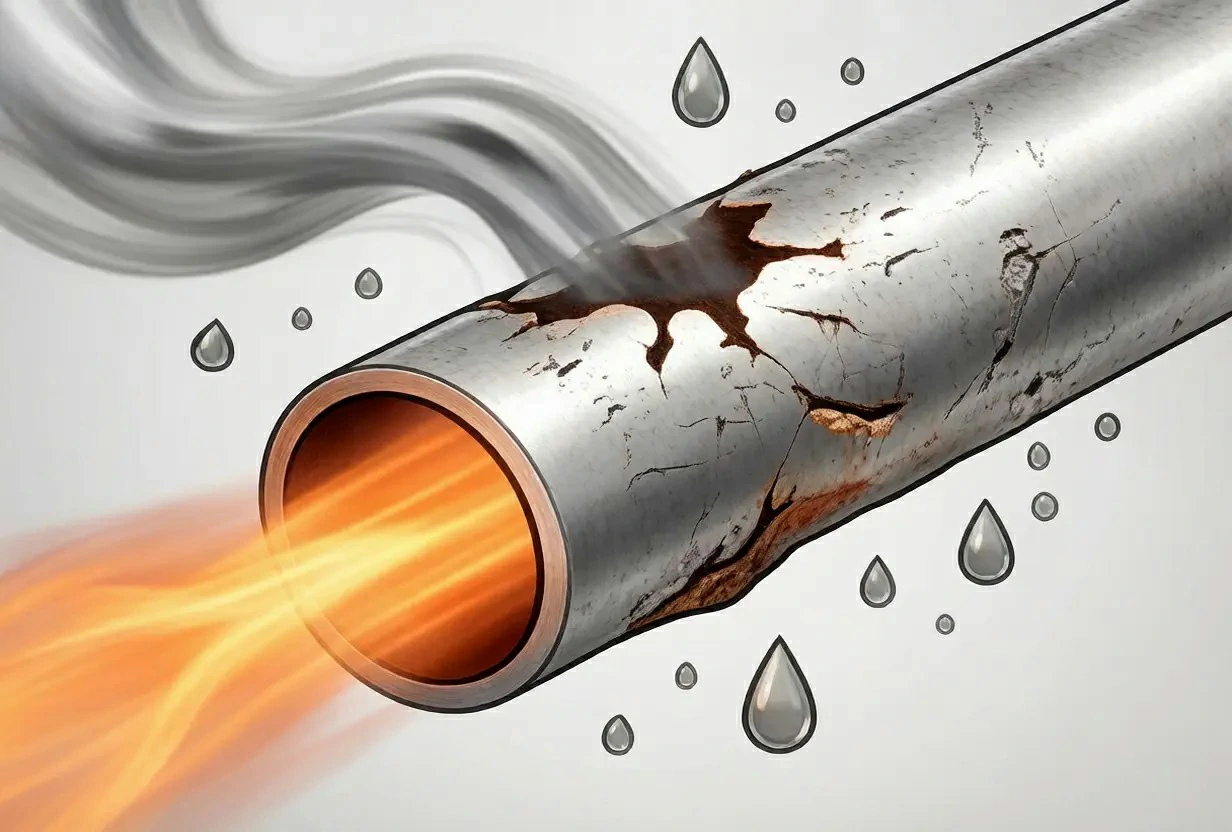
Corrosion risk increases dramatically below the acid dew point.
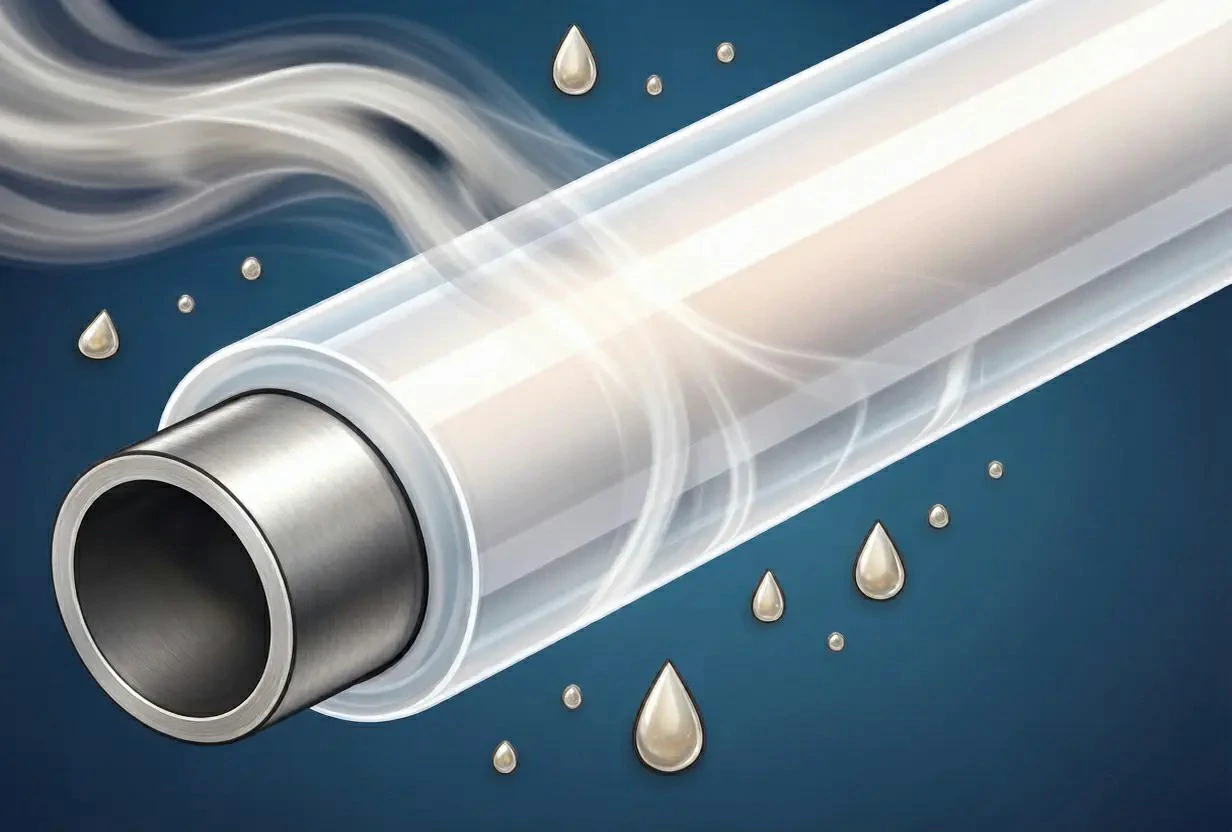
Corrosion-resistant fluoroplastic surfaces protect the heat transfer area while steel provides structural strength. This allows safe operation at lower temperatures.
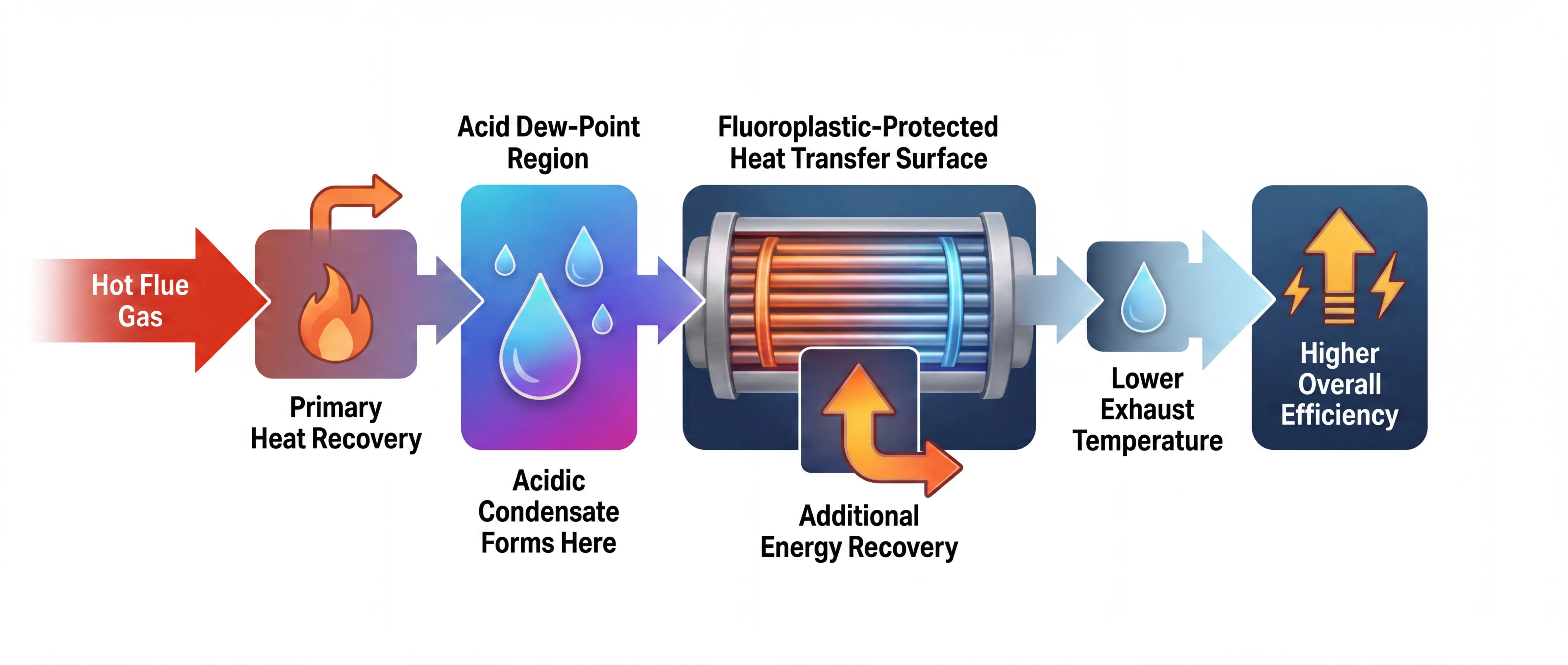

Recover additional thermal energy from existing operations.

Reduce external energy demand.

Increase overall heat utilization.

Generate greater long-term value from recovered heat.
Deep Heat Recovery
Condensation Recovery
Combuation Optimization

Industrial Heating