Time: Jul 6 2026 Views: 7
INTRODUCTION
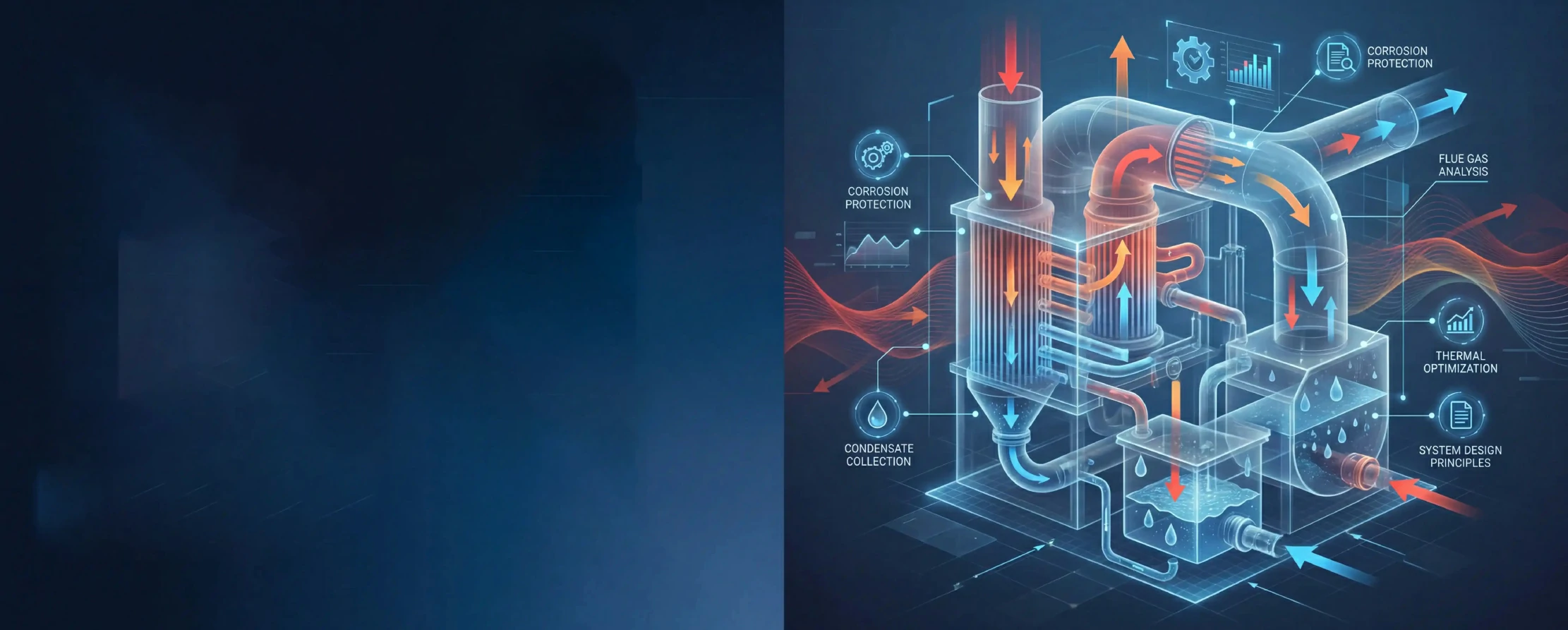
System design logic defines how individual components are integrated into a complete and functional industrial heat recovery system.
In flue gas heat recovery applications, performance is not determined by a single heat exchanger, but by the interaction between:
● thermal design
● flow dynamics
● corrosion control
● pressure management
● material selection
● system integration
PRINCIPLE 1 — SYSTEM THINKING OVER COMPONENT THINKING
A heat recovery system must be designed as a unified energy system, not as isolated equipment.
The system includes:
● flue gas source
● heat exchanger network
● energy recovery interface
● exhaust handling system
> System performance is determined by interactions, not individual components.
PRINCIPLE 2 — FLUE GAS FLOW DESIGN CONTROLS PERFORMANCE
Flue gas flow behavior directly affects:
● heat transfer efficiency
● temperature distribution
● fouling formation
● corrosion risk
Poor flow design leads to:
● uneven heat exchange
● localized overheating or condensation
● reduced recovery efficiency
A well-designed system ensures uniform flow across heat transfer surfaces.
PRINCIPLE 3 — HEAT TRANSFER MUST BE BALANCED WITH PRESSURE LOSS
Increasing heat transfer surface improves efficiency but also increases resistance.
System design must balance:
● heat recovery capacity
● pressure drop
● fan energy consumption
> Excessive pressure loss reduces net system efficiency.
PRINCIPLE 4 — CORROSION DEFINES SYSTEM BOUNDARIES
Corrosion is not a material issue alone — it is a system design constraint.
When flue gas temperature approaches or drops below the acid dew point:
● acidic condensation occurs
● corrosion accelerates
● system reliability decreases
Therefore, corrosion protection must be embedded in system architecture.
PRINCIPLE 5 — TEMPERATURE CONTROL DEFINES ENERGY RECOVERY DEPTH
The key objective of system design is controlled temperature reduction.
However:
● lower temperature increases efficiency
● but increases corrosion risk
System design must define a safe operating temperature window that maximizes recovery while maintaining stability.
PRINCIPLE 6 — MATERIAL AND STRUCTURE MUST BE INTEGRATED
System performance depends on the interaction between:
● structural strength
● thermal conductivity
● corrosion resistance
For example:
● steel provides mechanical integrity
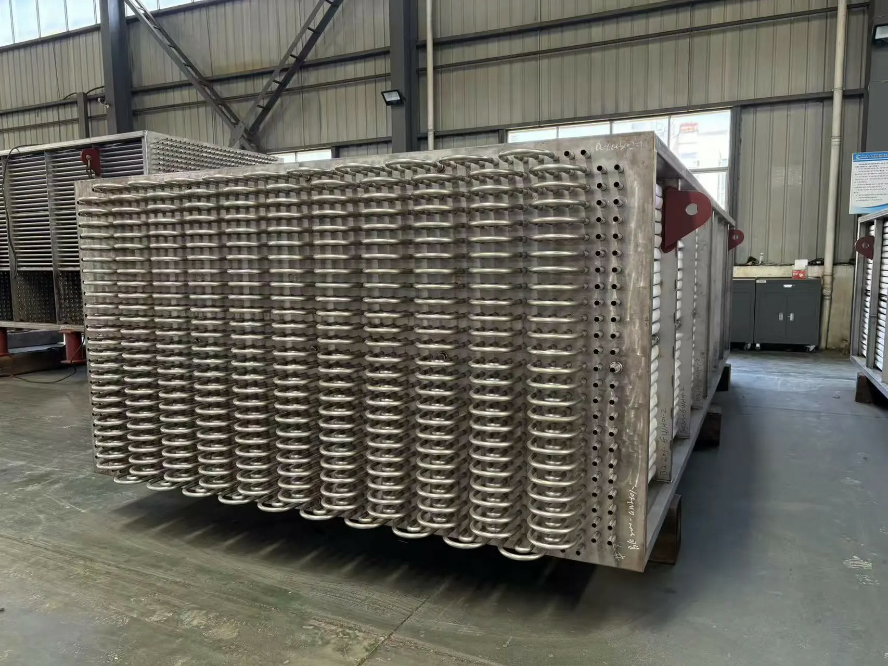
● fluoroplastic provides corrosion protection
● composite structures combine both functions
> Material selection must align with system-level objectives.
PRINCIPLE 7 — SYSTEM STABILITY IS MORE IMPORTANT THAN PEAK PERFORMANCE
A high-performing system at startup does not guarantee long-term success.
System design must prioritize:
● long-term stability
● fouling resistance
● corrosion resistance
● maintainability
> Sustainable performance is more important than peak efficiency.
PRINCIPLE 8 — ENERGY RECOVERY IS A SYSTEM OUTCOME
Heat recovery is not a single-step process.
It depends on the full system chain:
● flue gas generation
● thermal exchange
● energy transfer
● exhaust discharge
Any weak point in the chain reduces overall efficiency.
KEY INSIGHT
System Design Is About Balancing Competing Constraints
Effective system design is not about maximizing one parameter.
It is about balancing:
● efficiency
● pressure drop
● corrosion resistance
● mechanical stability
● lifecycle cost
The best system is the one that maintains **stable performance under real industrial conditions**.
CONCLUSION
System design logic in heat recovery engineering requires a holistic approach.
By integrating thermal engineering, fluid dynamics, corrosion science, and material selection, a system can achieve:
● higher energy recovery
● improved reliability
● lower lifecycle cost
● stable long-term operation

@ 2025-2026 Langteng Machinery. All Rights Reserved.