
Time: Jul 6 2026 Views: 5
INTRODUCTION
Flue gas flow design is a fundamental aspect of industrial heat recovery system engineering.
It determines how exhaust gases move through heat exchangers and directly influences:
● heat transfer efficiency
● pressure drop behavior
● fouling distribution
● corrosion risk zones
● overall system stability
A well-designed flow system ensures stable, efficient, and long-term heat recovery performance.
PRINCIPLE 1 — UNIFORM FLOW DISTRIBUTION IS ESSENTIAL
Even Flow Ensures Stable Heat Transfer
Uneven flue gas distribution leads to:
● localized overheating
● uneven condensation
● inefficient heat exchange
● accelerated material degradation
A properly designed system ensures that flue gas is evenly distributed across all heat transfer surfaces.
PRINCIPLE 2 — SMOOTH FLOW PATHS REDUCE ENERGY LOSS
Avoid Sudden Direction Changes
Sharp bends, abrupt expansions, or contractions in the flow path cause:
● turbulence increase
● pressure drop rise
● flow separation zones
Optimized flow design uses:
● gradual transitions
● streamlined duct geometry
● reduced flow obstruction
PRINCIPLE 3 — FLOW VELOCITY MUST BE CONTROLLED
Flue gas velocity directly affects system performance:
● high velocity → better heat transfer but higher pressure drop
● low velocity → lower pressure drop but reduced heat transfer
Engineering design must define an optimal velocity range based on system conditions.
PRINCIPLE 4 — MINIMIZE DEAD ZONES AND STAGNATION AREAS
Prevent Localized Fouling and Corrosion
Dead zones occur where gas velocity is too low or flow is separated.
These areas cause:
● dust accumulation
● uneven temperature distribution
● localized corrosion
● reduced system efficiency
Good design ensures continuous, active flow across all regions.
PRINCIPLE 5 — TEMPERATURE GRADIENT CONTROL IS CRITICAL
Flue gas temperature decreases during heat recovery.
If flow is poorly controlled:
● cold spots form
● acid condensation occurs
● corrosion accelerates
Proper flow design ensures controlled and gradual temperature reduction across the system.
PRINCIPLE 6 — PARTICULATE BEHAVIOR MUST BE CONSIDERED
In industrial systems, flue gas often contains dust and particulates.
Flow design must ensure:
● particles do not settle in critical zones
● velocity is sufficient to prevent accumulation
● cleaning access is considered in design
Failure to manage particulate behavior leads to rapid fouling.
PRINCIPLE 7 — SYSTEM RESISTANCE MUST BE BALANCED
Flow Design Affects Pressure Drop
Flow path design directly impacts system resistance:
● longer paths → higher pressure drop
● complex geometry → increased turbulence
● poor transitions → energy loss
Optimal design balances:
> heat transfer effectiveness vs flow resistance
PRINCIPLE 8 — FLOW DESIGN AND CORROSION ARE LINKED
Flue gas flow directly influences corrosion behavior:
● stagnant zones → severe localized corrosion
● uneven cooling → condensation hotspots
● high turbulence → surface erosion effects
Proper flow design reduces corrosion risk by maintaining stable thermal and chemical conditions.
ENGINEERING STRATEGY
How Flue Gas Flow Is Optimized
Effective flow design typically includes:
1. Streamlined Duct Geometry
● smooth transitions
● minimized abrupt changes
● optimized cross-section changes
2. Uniform Distribution Systems
● flow balancing structures
● controlled inlet design
● equalized surface exposure
3. Anti-Fouling Layout Design
● avoid particle accumulation zones
● maintain self-cleaning velocity ranges
4. Integrated Heat Exchanger Arrangement
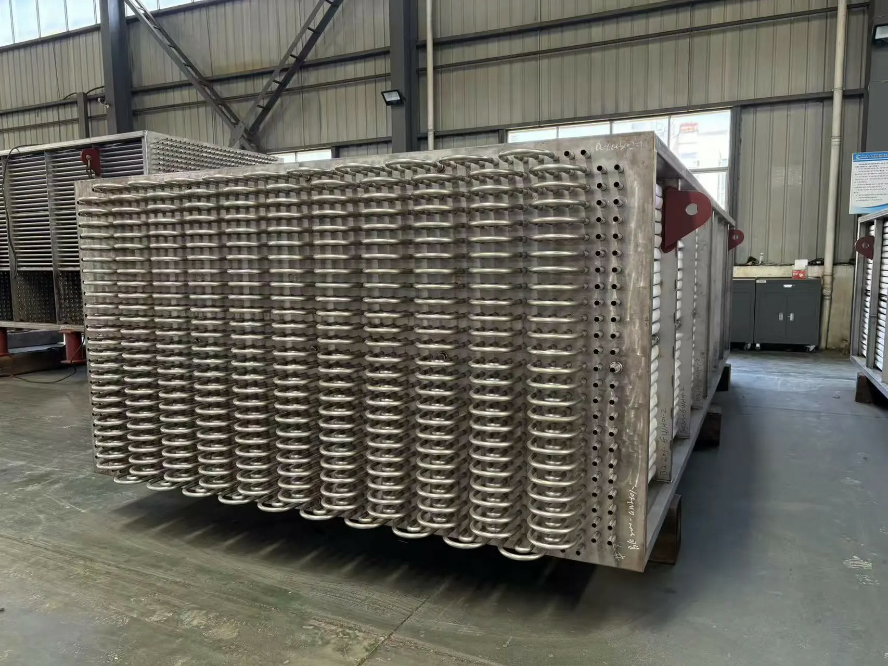
Fluoroplastic-steel systems support:
● stable flow channels
● reduced fouling adhesion
● long-term flow consistency
KEY INSIGHT
Flow Design Determines System Stability
Even highly advanced heat recovery systems will underperform if flue gas flow is poorly designed.
> Flow behavior defines heat transfer efficiency, pressure drop, and corrosion risk simultaneously.
CONCLUSION
Flue gas flow design principles are essential for achieving reliable and efficient industrial heat recovery systems.
By controlling:
● flow distribution
● velocity
● turbulence
● temperature gradients
engineers can ensure:
● higher energy recovery
● lower pressure loss
● reduced corrosion risk
● improved long-term system stability

@ 2025-2026 Langteng Machinery. All Rights Reserved.