Time: Jul 6 2026 Views: 4
INTRODUCTION
Installation and layout engineering defines how heat recovery systems are physically arranged, installed, and integrated into industrial facilities.
Even the most advanced heat exchanger system will underperform if installation and layout are not properly engineered.
This discipline directly impacts:
● system efficiency
● pressure drop behavior
● maintenance accessibility
● corrosion performance
● long-term operational stability
PRINCIPLE 1 — SYSTEM LAYOUT DETERMINES REAL PERFORMANCE
Design Is Not Enough Without Proper Layout
A well-designed system can fail in practice if installed incorrectly.
Key layout factors include:
● equipment positioning
● flue gas duct routing
● flow direction alignment
● access for maintenance
> Real performance is defined in the field, not on paper.
PRINCIPLE 2 — FLOW PATH ALIGNMENT IS CRITICAL
Flue gas must pass through heat recovery systems in a controlled and predictable manner.
Poor alignment causes:
● uneven heat distribution
● localized corrosion
● increased pressure drop
● fouling accumulation zones
Proper installation ensures smooth and uniform flow across heat transfer surfaces.
PRINCIPLE 3 — PRESSURE DROP MUST BE CONSIDERED IN LAYOUT DESIGN
Installation layout directly affects system resistance.
Common layout mistakes:
● excessive duct length
● unnecessary bends
● abrupt diameter changes
● poor transition design
These increase:
● fan energy consumption
● operational cost
● system instability
PRINCIPLE 4 — THERMAL GRADIENT CONTROL IN INSTALLATION
System layout influences temperature distribution.
Poor layout leads to:
● cold spots
● acid condensation zones
● uneven thermal stress
Proper installation ensures gradual and controlled temperature reduction across the system.
PRINCIPLE 5 — CORROSION RISK DEPENDS ON INSTALLATION DESIGN
Corrosion is strongly influenced by layout decisions.
Risk increases in:
● stagnant flow areas
● low-velocity zones
● condensation accumulation points
Good installation design minimizes:
● dead zones
● moisture retention areas
● localized acid concentration
PRINCIPLE 6 — MAINTENANCE ACCESSIBILITY IS A DESIGN REQUIREMENT
Heat recovery systems operate in harsh environments and require periodic inspection.
Installation must ensure:
● easy access to heat exchanger modules
● cleaning and inspection pathways
● safe maintenance clearance
● modular replacement capability
Poor accessibility increases lifecycle cost significantly.
PRINCIPLE 7 — STRUCTURAL AND THERMAL EXPANSION MUST BE CONSIDERED
Industrial systems experience:
● thermal expansion
● vibration
● mechanical stress from gas flow
Installation design must include:
● expansion joints
● flexible supports
● vibration isolation structures
This ensures long-term mechanical stability.
PRINCIPLE 8 — SYSTEM INTEGRATION IS THE FINAL STEP
Installation is not only physical assembly — it is system integration.
It must coordinate:
● upstream flue gas source
● heat exchanger modules
● downstream energy recovery systems
● control and monitoring systems
> Proper integration ensures stable system-wide performance.
ENGINEERING STRATEGY
Key Installation Design Practices
1. Optimized Equipment Positioning
● * minimize flow resistance
● * ensure uniform gas distribution
● * reduce thermal imbalance
2. Streamlined Duct Layout
● avoid unnecessary bends
● ensure smooth transitions
● maintain stable flow velocity
3. Modular System Design
● easier installation
● simplified maintenance
● flexible system upgrades
4. Corrosion-Aware Layout
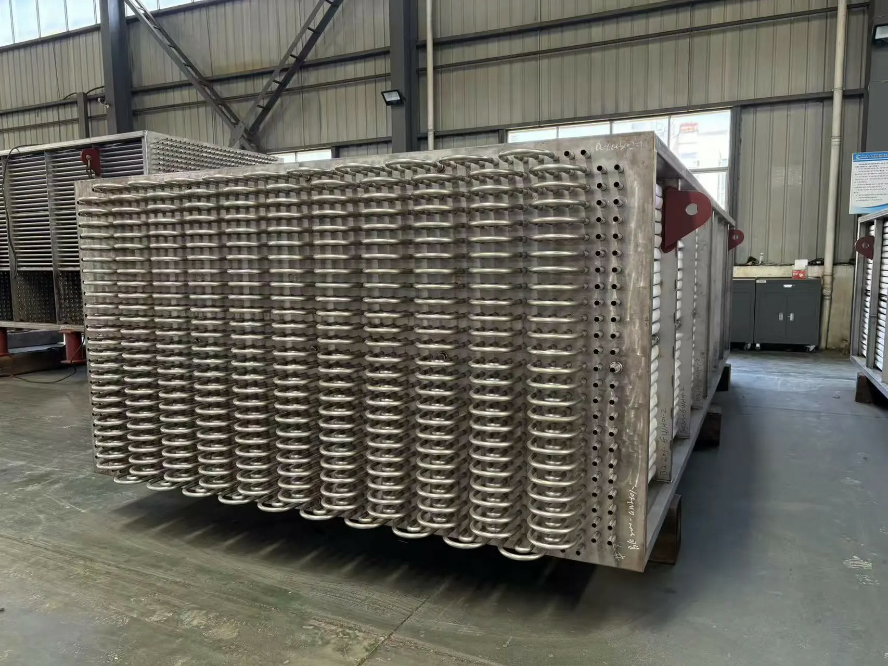
Fluoroplastic-steel systems allow:
* safer operation in condensation zones
* reduced surface corrosion risk
* improved long-term reliability
KEY INSIGHT
Installation Defines Real-World Performance
Even the best-designed heat recovery system will fail to reach expected performance if installation is poor.
> Layout engineering is where theory becomes reality.
CONCLUSION
Installation and layout engineering is a critical phase in heat recovery system implementation.
By properly designing:
● flow paths
● structural layout
● thermal distribution
● maintenance access
engineers can ensure:
● stable energy recovery
● reduced pressure loss
● lower corrosion risk
● improved lifecycle performance

@ 2025-2026 Langteng Machinery. All Rights Reserved.