
Time: Jul 6 2026 Views: 5
INTRODUCTION
Metallurgy and smelting processes generate large volumes of high-temperature, dust-laden, and chemically aggressive flue gas.
These conditions make heat recovery both highly valuable and technically challenging.
Effective heat recovery systems in this industry must balance:
● high thermal loads
● severe dust contamination
● strong corrosion potential
● continuous heavy-duty operation
FLUE GAS CHARACTERISTICS
Extreme Industrial Conditions
Metallurgy and smelting flue gas typically includes:
● High temperature exhaust (150°C – 400°C)
● High dust and particulate concentration
● Sulfur compounds (SO₂ / SO₃)
● Acid dew-point corrosion risk
● Abrasive particles causing surface wear
● Continuous 24/7 operating conditions
These combined factors create one of the most demanding environments for heat recovery systems.
KEY ENERGY RECOVERY OPPORTUNITY
High Waste Heat Potential
Smelting and metallurgical processes consume large amounts of energy, with significant heat loss occurring through exhaust systems.
Without heat recovery:
● large thermal energy is lost to atmosphere
● fuel efficiency remains low
● operational costs increase
Recovering this waste heat can significantly improve overall plant efficiency.
APPLICATION SCENARIOS
Where Heat Recovery Is Used
1. Furnace Exhaust Heat Recovery
High-temperature furnace gases are used to preheat combustion air or water systems.
2. Waste Gas Energy Utilization
Energy is recovered from process off-gases before discharge.
3. Boiler Feedwater Preheating
Recovered heat improves boiler efficiency and reduces fuel consumption.
4. Auxiliary Heating Systems
Recovered energy supports plant heating and process requirements.
ENGINEERING CHALLENGES
Harsh Operating Environment
Metallurgy and smelting applications introduce multiple simultaneous challenges:
1. High Dust Load
Dust particles cause:
● fouling of heat transfer surfaces
● reduced heat exchange efficiency
● increased maintenance frequency
2. Corrosive Gases
Sulfur compounds lead to:
● acid formation
● acid dew-point corrosion
● accelerated material degradation
3. High Thermal Stress
Large temperature variations can cause:
● thermal expansion stress
● mechanical fatigue
● structural deformation risk
4. Continuous Operation
Systems must operate:
● 24/7
● under variable load conditions
● with minimal downtime
ENGINEERING REQUIREMENTS
What Heat Recovery Systems Must Achieve
To perform reliably in metallurgy and smelting environments, systems must provide:
● strong corrosion resistance under acidic conditions
● anti-fouling surface design for dust-heavy gas
● stable performance under high temperatures
● low pressure drop for large gas flow volumes
● long service life under continuous operation
ENGINEERING SOLUTION
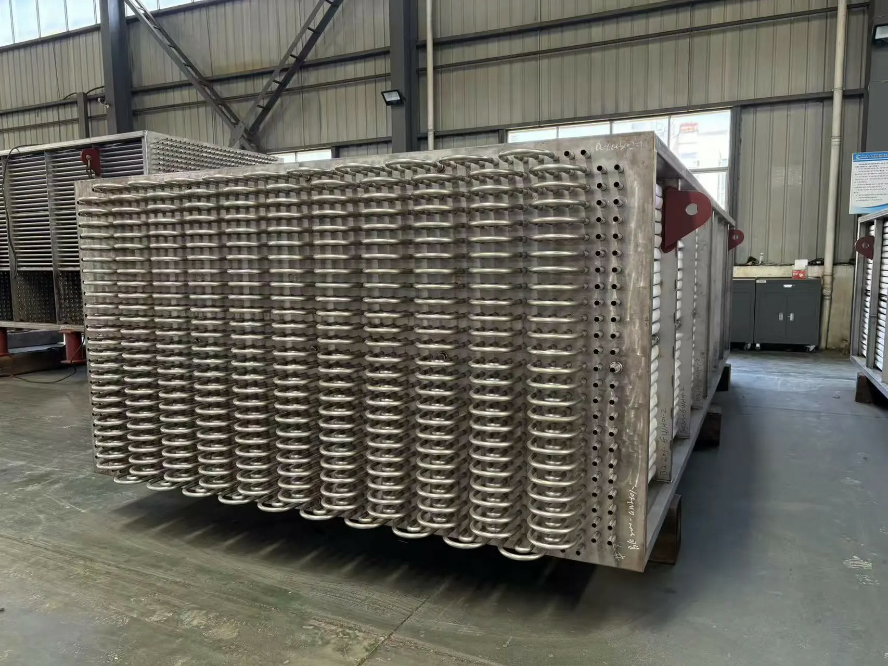
Fluoroplastic-Steel Heat Recovery Systems
Advanced composite systems are designed specifically for these harsh conditions.
### Fluoroplastic Layer
● Resists acid corrosion
● Reduces fouling and dust adhesion
● Protects heat transfer surfaces
Steel Structural Core
● Provides high mechanical strength
● Supports thermal and structural stress
● Ensures stability in heavy-duty operation
Combined Advantage
> Enables reliable heat recovery in high-dust, high-corrosion metallurgical environments.
SYSTEM BENEFITS
Why Metallurgy Plants Adopt Heat Recovery Systems
1. Improved Energy Efficiency
Recover waste heat from high-temperature exhaust streams.
2. Reduced Fuel Consumption
Recovered heat reduces additional energy input requirements.
3. Stable Long-Term Operation
Composite structure improves durability in harsh conditions.
4. Lower Maintenance Frequency
Anti-fouling and corrosion-resistant surfaces reduce cleaning and repair cycles.
5. Enhanced Process Sustainability
Better energy utilization supports lower emissions and improved environmental performance.
KEY INSIGHT
Dust and Corrosion Must Be Solved Together
In metallurgy and smelting systems, performance limitations are not caused by heat availability, but by:
● dust fouling
● corrosion at low temperatures
● mechanical wear
Effective heat recovery requires solving all three simultaneously.
CONCLUSION
Metallurgy and smelting applications represent one of the most demanding environments for heat recovery systems.
By combining corrosion-resistant materials with optimized structural design, it is possible to:
● recover significant waste heat
● improve energy efficiency
● reduce operational costs
● maintain long-term system stability

@ 2025-2026 Langteng Machinery. All Rights Reserved.