
Time: Jul 6 2026 Views: 3
INTRODUCTION
Power generation facilities produce large volumes of high-temperature flue gas as a byproduct of combustion processes.
This flue gas contains significant recoverable thermal energy that is typically discharged through stacks, resulting in energy loss.
Heat recovery systems are designed to capture this waste heat and convert it into usable energy for:
● boiler feedwater preheating
● district heating systems
● process steam generation
● auxiliary plant heating
TYPICAL FLUE GAS CONDITIONS
Power Plant Exhaust Characteristics
Power generation flue gas typically features:
● Temperature range: 120°C – 350°C
● High moisture content
● Presence of sulfur compounds (SO₂ / SO₃)
● Acid dew-point corrosion risk
● Large and continuous flow volumes
These conditions make heat recovery both highly valuable and technically challenging.
KEY OPPORTUNITY IN POWER GENERATION
Waste Heat as Recoverable Energy
A significant portion of fuel energy is lost through exhaust flue gas.
Without heat recovery systems:
● thermal energy is discharged to atmosphere
● overall plant efficiency is reduced
● fuel consumption remains higher than necessary
By implementing heat recovery systems, this waste energy can be reused within the plant cycle.
HEAT RECOVERY APPLICATIONS
Where Recovered Energy Is Used
1. Boiler Feedwater Preheating
Recovered heat is used to increase feedwater temperature before entering the boiler system.
2. District Heating Systems
Heat is transferred to external heating networks for residential or industrial use.
3. Process Heating Support
Recovered energy supports auxiliary thermal processes within the plant.
4. Air Preheating
Combustion air is preheated to improve overall combustion efficiency.
ENGINEERING CHALLENGE
Balancing Efficiency and Corrosion Risk
In power generation systems, increasing heat recovery efficiency requires lowering flue gas temperature.
However:
● lower temperature increases acid condensation
● condensation leads to acid dew-point corrosion
● corrosion reduces equipment lifespan
This creates a fundamental design constraint:
> Higher efficiency vs higher corrosion risk
TECHNOLOGY REQUIREMENTS
What Power Plants Need from Heat Recovery Systems
To operate reliably in power generation environments, systems must provide:
● corrosion resistance under acid dew-point conditions
● stable long-term operation under continuous load
● low pressure drop design for large gas volumes
● high thermal efficiency for energy recovery
● long lifecycle performance with minimal downtime
ENGINEERING SOLUTION
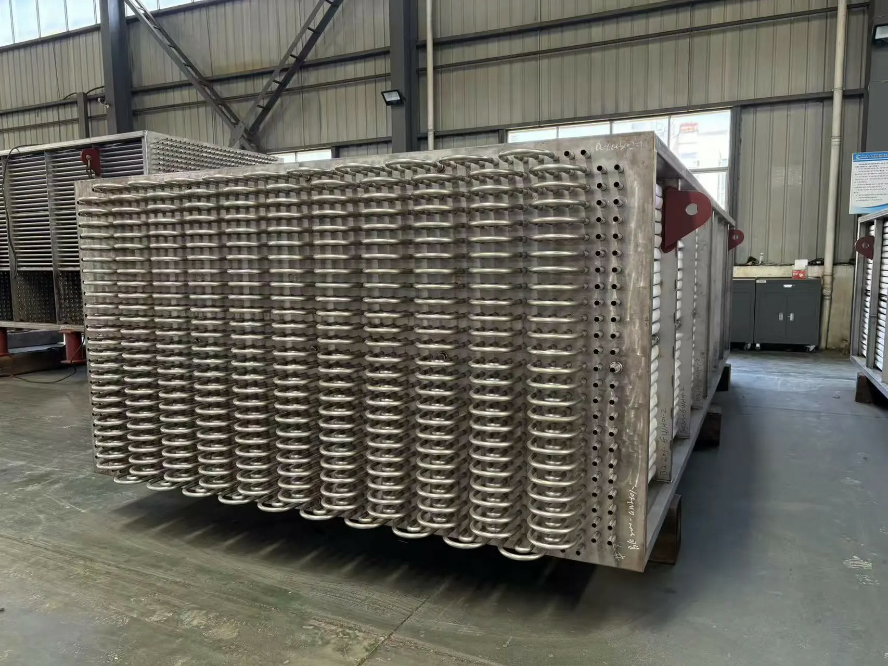
Fluoroplastic-Steel Heat Recovery Systems
Advanced composite heat recovery systems are designed to address these challenges.
Fluoroplastic Layer
● Protects against acidic condensation
● Prevents corrosion on heat transfer surfaces
● Reduces fouling and scaling
Steel Structural Core
* Provides mechanical strength
* Supports high flow and pressure conditions
* Ensures long-term structural stability
Combined Performance
This structure enables:
> Deep heat recovery under corrosive flue gas conditions with long-term reliability.
SYSTEM BENEFITS
Why Power Plants Use Heat Recovery Systems
1. Improved Plant Efficiency
More energy is recovered from fuel input.
2. Reduced Fuel Consumption
Recovered heat reduces additional fuel demand.
3. Lower Emissions
Improved efficiency reduces CO₂ and pollutant output.
4. Stable Long-Term Operation
Corrosion-resistant design improves system reliability.
5. Better Lifecycle Economics
Lower operating costs and improved energy utilization.
KEY INSIGHT
Efficiency Gains Are Limited by Corrosion
In power generation systems, the main limitation to deeper heat recovery is not thermal availability, but material durability under acidic conditions.
Corrosion protection engineering enables lower temperature operation and higher energy recovery.
CONCLUSION
Power generation applications represent one of the most important use cases for industrial heat recovery systems.
By integrating corrosion-resistant materials with optimized system design, it is possible to:
● increase energy utilization
● improve plant efficiency
● reduce fuel consumption
● enhance long-term reliability

@ 2025-2026 Langteng Machinery. All Rights Reserved.